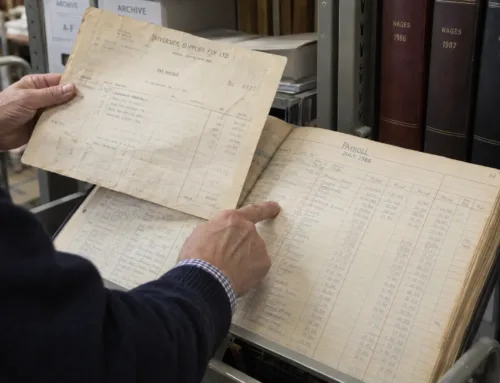


Yes. The ATO can reduce or cancel penalties imposed for overdue tax returns through a process called remission. However, relief is discretionary, and lodging the missing return does not automatically remove a penalty. We build a request around the reason for the delay, supporting evidence and the steps taken to restore compliance. Reliable bookkeeping and tax preparation help us establish those facts while separating penalties from unpaid tax and interest.
For business owners, directors and investors, we treat remission as one part of restoring financial control, not a substitute for resolving outstanding obligations.
What can the ATO actually remove?
We first identify the charge on the ATO account. A failure to lodge on time penalty, interest on unpaid tax and the underlying tax debt require different responses.
| Amount on the account | What it relates to | How we approach relief |
|---|---|---|
| Failure to lodge on time penalty | Missing a required lodgement deadline | Request full or partial remission based on the circumstances |
| General interest charge (GIC) | Unpaid tax or other overdue amounts | Consider a separate interest remission request |
| Tax shortfall penalty | An incorrect statement that results in insufficient tax being assessed | Review the assessment, behaviour findings and available remission or objection grounds |
| Underlying tax debt | Tax properly payable | Verify the assessment and address payment separately |
We use bookkeeping and tax preparation records to establish which amounts are correct before seeking relief. Penalty remission does not, by itself, cancel correctly assessed tax.
Under the ATO’s failure to lodge on time rules, the base penalty for a small entity is generally one penalty unit for each 28-day period, or part of that period, up to five units. Larger entities can face multipliers. We check the applicable entity category and penalty-unit value rather than relying on an outdated dollar estimate.
Not every late return attracts a penalty, so we confirm what has actually been assessed before preparing a request.
What makes a penalty remission request persuasive?
A credible request explains why the obligation was missed, how long the disruption lasted and what happened once compliance became possible. We focus on a documented connection between the circumstances and the particular deadline.
Establish the cause of the delay
Serious illness, a natural disaster, bereavement or an unavoidable loss of essential records may support remission. The circumstances must explain the failure to lodge, rather than simply overlap with it.
For example, a hospital admission close to a lodgement deadline may be relevant. If a return remains outstanding months after recovery, we also need to explain that later period.
Bookkeeping and tax preparation can establish which records were unavailable and when they became usable again. That chronology is more persuasive than a broad statement that the business experienced a difficult year.
We also consider whether alternative arrangements were reasonably available. A company with several finance staff may need a different explanation from a sole director whose illness stopped all business administration.
Demonstrate a reasonable response
We assess whether the taxpayer contacted the ATO, sought a deferral, attempted to recover records or arranged professional assistance. A good compliance history can support the request, but we do not treat it as an entitlement to a waiver.
The ATO’s practice statement on administering failure to lodge penalties provides the administrative framework. We address the circumstances of the individual case rather than relying on a generic hardship letter.
Being busy, misunderstanding a deadline or assuming an accountant had lodged a return does not automatically justify remission. Where responsibility was shared, we establish what instructions, reminders and follow-up actually occurred.
How bookkeeping and tax preparation strengthen a remission request
A persuasive submission needs a reliable evidence base. We organise the records so the ATO can follow the explanation without reconstructing the position itself.
Our core evidence checklist includes:
- The relevant notices: Penalty assessments, outstanding lodgement notices and any earlier ATO correspondence.
- A dated chronology: The original deadline, disruptive event, recovery period and subsequent compliance steps.
- Supporting documents: Relevant medical evidence, disaster records, system outage reports or correspondence about inaccessible records.
- Lodgement evidence: Confirmation of returns submitted, obligations still outstanding and any agreed deferrals.
- Corrective controls: Changes to responsibilities, record access and deadline monitoring that address the original failure.
We keep the submission proportionate. Sensitive information should support the explanation without disclosing more than necessary, and taxpayer identifiers belong in authorised communications rather than unsecured correspondence.
Where several entities or financial years are involved, we map each penalty to its own obligation. A disruption affecting one company does not necessarily explain a separate trust’s delay. Likewise, evidence supporting one period may not justify remission across every overdue year.
How we approach the remission process
Confirm obligations and restore lodgements
We first verify which returns are outstanding, whether the recorded due dates are correct and whether any deferrals already apply. Engaging a new tax agent does not automatically extend an overdue deadline.
We then use bookkeeping and tax preparation to reconcile the underlying records and prepare accurate returns. Rushing incomplete figures into a return can create amendment work or additional compliance exposure.
Our approach to resolving overdue tax return notices explains the broader recovery sequence. For remission purposes, the key is demonstrating concrete progress rather than making an unsupported promise to lodge later.
Submit a specific request
We identify the penalty and relevant period, state whether full or partial remission is sought and explain the supporting grounds. Where the ATO requires a written submission or supporting documents, we provide them through the appropriate channel.
If some obligations cannot be resolved immediately, we explain the remaining work and propose a realistic timetable. We do not postpone contact with the ATO simply because every missing document has not yet been recovered.
A request may succeed only in part. For a long delay, evidence might explain an initial period without justifying everything that followed.
Manage payment and interest separately
We keep bookkeeping and tax preparation moving while the remission request is considered. Lodging a return and paying the resulting liability are separate obligations, so an inability to pay is not a sound reason to leave a return unlodged.
Where necessary, we assess a payment arrangement alongside a separate GIC remission request. A payment plan does not automatically stop interest or remove penalties. We also check whether the ATO has agreed to pause any recovery action rather than assuming a remission request provides that protection.

An example: strong grounds, but not an automatic waiver
Consider a hypothetical company whose sole director suffers a serious illness shortly before its tax return deadline. Essential records are inaccessible during the director’s absence. After recovery, the company appoints an adviser, restores access and lodges the return.
We would document the medical disruption, the director’s role, the record-access problem and the time taken to restore compliance. We would also explain why another person could not reasonably complete the task during the absence.
In this situation, bookkeeping and tax preparation help connect the disruption to the actual lodgement delay. Reconciled records, correspondence and lodgement confirmations make the sequence verifiable.
The ATO could still ask why no deferral was requested or why lodgement took a particular length of time after recovery. If the return remained outstanding well beyond the period explained by the evidence, full remission would be less persuasive.
This example illustrates the method, not a predicted outcome. We assess the available evidence before recommending the scope of a request.
What if the ATO refuses remission?
We obtain and review the reasons for the decision before choosing the next step. A refusal may reflect missing evidence, an unexplained period of delay or disagreement about whether the circumstances justify relief.
Where useful information was omitted, we consider providing it through the appropriate process. Repeating the same explanation without addressing the ATO’s reasons is unlikely to improve the request.
Under the statutory framework, a refusal to remit can generally be challenged by formal objection where the penalty remaining exceeds two penalty units. We check the particular decision, review rights and applicable deadline promptly. An informal request for reconsideration should not be assumed to preserve objection rights.
We retain the bookkeeping and tax preparation evidence supporting the original submission, then identify precisely which findings are disputed. Smaller penalties and other decisions may involve different review options, so we do not assume every refusal follows the same pathway.
We also weigh the amount at stake against professional costs and the strength of the evidence. The commercial objective is a defensible resolution, not a prolonged dispute without a realistic basis.
Preventing another penalty cycle
A remission request is stronger when the business has addressed the process failure behind the missed deadline. More importantly, those changes reduce the risk of repeating the same disruption.
We recommend a shared compliance calendar, clear responsibility for each entity and regular reconciliation of bank, GST and payroll records. Depending on the structure, that calendar should cover income tax returns, BAS, PAYG withholding, superannuation obligations and FBT.
Our approach to bookkeeping and tax preparation uses AI-driven automation to reduce manual processing, supported by professional review. Automated workflows can improve processing speed, highlight incomplete information and support more timely financial visibility. They do not replace judgement about tax treatment or substantiate a remission claim on their own.
Accurate records also support strategic advisory and corporate growth. We can assess tax provisions, cash requirements and funding decisions earlier, rather than discovering an unplanned liability after year-end.
Our guidance on tax-efficient accounting that improves cash flow explores that connection. The objective is to make compliance a dependable foundation for decisions, not a recurring administrative emergency.
Frequently asked questions
Will lodging an overdue return automatically cancel the penalty? No. We treat lodgement and penalty remission as separate matters. Submitting the return resolves the outstanding lodgement obligation, but an assessed penalty remains unless the ATO remits it or it is otherwise changed through the appropriate process.
Can the ATO remove both penalties and interest? Potentially, but we assess them separately. Failure to lodge penalties and GIC arise for different reasons. A successful penalty remission request does not automatically establish grounds for interest remission.
Does financial hardship guarantee remission? No. We distinguish difficulty paying from the reason a return was lodged late. Financial circumstances may be relevant to the overall position, but we still need to explain the missed lodgement deadline and consider payment assistance separately.
Can outsourcing bookkeeping and tax preparation guarantee that penalties will be removed? No. Professional assistance can improve record quality, identify missed obligations and support an evidence-based request. The ATO still decides whether remission is justified. We also assess any adviser-related delay on its particular facts rather than assuming it transfers responsibility away from the taxpayer.
Can we request remission for penalties relating to several years? We can assess multiple penalties, but each period needs a defensible explanation. One submission may address several periods, provided it clearly identifies the penalties and explains how the evidence applies to each.
Next steps: assess the notice and build a defensible response
We recommend starting with the penalty notice, outstanding lodgement list and a dated explanation of what caused the delay. From there, our team can assess the remission grounds, restore accurate records and coordinate a separate plan for any tax debt.
At Perfect Accounting & Tax Services, we support clients across Australia through integrated services in Adelaide, Sydney and Melbourne. We combine late return assistance, strategic advisory and AI-driven workflows to improve compliance and financial visibility.
Contact our team for a consultation to review an ATO penalty notice or discuss an automated accounting workflow that reduces the risk of future missed deadlines.