
Years of unlodged tax returns do not disappear because the records are old or the business has changed. Through our taxation services, we separate three issues: which returns remain outstanding, what tax is payable and whether penalties or interest apply. We can then build a recovery plan without treating every missing year as an identical problem.
We can generally lodge returns that are several years overdue. However, engaging an accountant does not automatically cancel penalties, reset deadlines or prevent ATO recovery action. Our priority is to establish the facts, protect the accuracy of each return and restore a reliable financial position.
Can we still lodge after several years?
We start by checking the ATO record against the taxpayer’s actual circumstances for each financial year. An outstanding item on an account needs investigation, but we should not assume every year requires the same response.
An individual may need an income tax return, or a non-lodgement advice where no return was required. Earning below the tax-free threshold does not, by itself, settle that question. Business activity, investment income, withholding and other circumstances can affect the obligation.
For companies, trusts and other entities, we separately establish their lodgement requirements. Closing a business or cancelling an ABN does not resolve earlier obligations.
Our taxation services also distinguish an original return that was never lodged from an assessment that already exists. If the ATO has issued a default assessment using available information, we must review the appropriate challenge process and its deadlines. Simply preparing another return may not resolve it.
We use the ATO’s tax return guidance alongside account records to confirm the correct pathway. Older years may require different lodgement methods from a current individual return.
Which penalties and interest can apply?
We assess each exposure separately rather than quoting a single “late tax” charge.
| Potential consequence | What we assess |
|---|---|
| Failure to lodge on time penalty | Whether a required document was overdue, the applicable penalty units and any grounds for remission |
| General interest charge | Whether a tax debt is overdue and the payment date from which interest applies |
| Default assessment | Whether the ATO has estimated taxable income or liability because information was missing |
| Debt recovery or enforcement | Existing debts, formal notices, collection activity and any urgent response deadlines |
Under the standard failure to lodge calculation, one penalty unit applies for each 28-day period, or part of a period, up to five units. Higher multipliers can apply depending on the entity’s classification. The dollar value requires checking against the applicable rules.
The base penalty is capped per overdue document, not across the entire backlog. Several missing returns can therefore create separate exposures. Ten years of delay does not mean ten years of uncapped base penalty units on one return.
The ATO generally does not apply this penalty where an income tax return produces a refund or no tax payable. We still check the circumstances against the ATO’s failure to lodge penalty guidance.
Through our taxation services, we also identify whether remission is supportable. Serious illness, circumstances outside the taxpayer’s control and documented attempts to comply may be relevant. Relief remains an ATO decision, not an entitlement we can promise.
Why we rebuild the years in sequence
A multi-year backlog is not simply a stack of independent forms. An error in an early year can flow into every later return.
We trace opening asset values, depreciation, carried-forward losses, capital gains calculations and amounts moving between entities. For a business owner, we may also need to reconcile company records with personal returns and distributions from a family trust.
Historical rules matter. We apply the tax rates, thresholds, deductions and concessions relevant to each income year, rather than applying today’s settings retrospectively. We also test whether a loss can actually be used; recording a loss does not automatically establish a future deduction.
Our usual approach is to reconstruct the earliest affected year first, then carry verified balances forward. An urgent ATO notice may require a different submission sequence, but it should not lead us to invent missing opening balances or overlook dependencies.
How taxation services deal with missing records
Missing receipts do not necessarily make an old return impossible to prepare. They do make evidence quality more important.
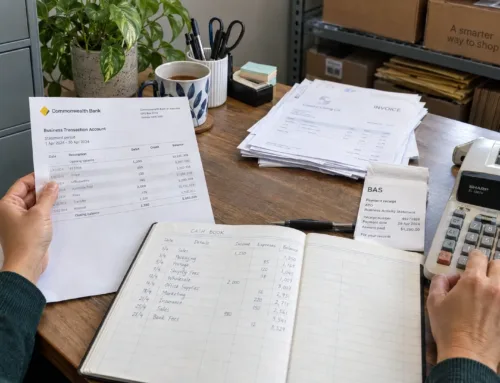
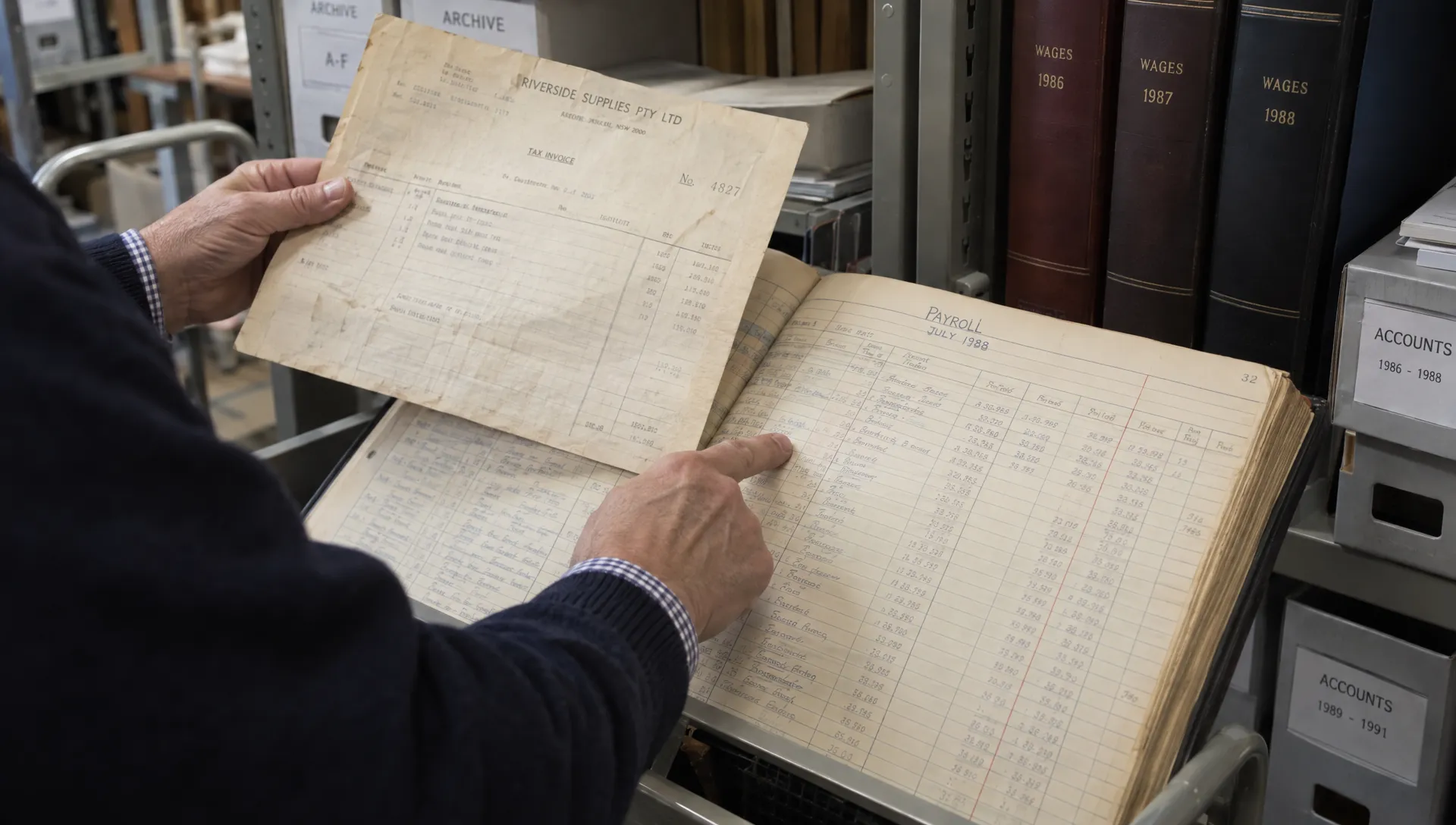
We build a records map using bank statements, payroll information, accounting files, invoices, investment statements, property settlement documents and information held by previous advisers. ATO pre-fill data can assist, but it is not a complete historical ledger.
For example, a bank deposit may represent sales, a loan, a capital contribution or a transfer between accounts. We establish its character before treating it as assessable income. Similarly, a payment appearing on a statement does not automatically substantiate a deductible business expense.
We distinguish between a supportable reconstruction and an unsupported estimate. Where evidence remains incomplete, we document the gap, assess the relevant substantiation rules and explain the effect on the proposed position.
Our AI-driven processes help classify transactions, flag duplicates and identify inconsistent balances across years. Professional review remains essential for tax treatment, private-use adjustments and unusual transactions. Automation improves speed and consistency; it does not replace evidence.
We structure our taxation services so the reconstructed records become useful beyond lodgement. Clean opening balances and connected digital records support more timely financial visibility, stronger cash-flow forecasting and strategic advisory work.
What changes for directors, trusts and significant assets?
We broaden the review when overdue personal returns sit alongside a company, trust, property portfolio or investment structure.
For company directors, an overdue company income tax return is not the same issue as unpaid PAYG withholding, GST or superannuation guarantee charge. Separate director penalty rules can create personal exposure in certain circumstances. We explain these distinctions in our analysis of director-specific risks from late reporting.
For trusts, we examine the trust deed, distribution resolutions, beneficiary reporting and whether earlier decisions were validly made. We cannot repair a historical problem merely by creating paperwork with an earlier date.
For substantial asset holdings, we investigate acquisition costs, improvements, ownership changes and disposals. Capital gains tax records may need to extend well beyond the years currently awaiting lodgement.
We also check connected obligations such as BAS, payroll reporting, FBT and superannuation. Completing income tax returns does not automatically bring these accounts up to date. Where formal demands or possible prosecution are involved, we prioritise the response and coordinate legal advice when appropriate. A late return alone does not establish fraud, but persistent non-compliance can escalate.

What if we cannot pay the resulting tax debt?
Lodgement and payment are separate obligations. We generally should not leave an accurate return unlodged solely because the resulting assessment may be unaffordable.
Instead, we prepare a cash-flow forecast alongside the outstanding returns. This establishes the likely liability, existing debts, current obligations and a realistic capacity to pay. We can then assess whether an ATO payment arrangement is appropriate. Acceptance is not automatic, and interest generally continues on unpaid amounts during an arrangement.
Our taxation services distinguish interest on an overdue debt from penalties for missing a lodgement deadline. General interest charge runs from the relevant payment due date, not simply because a return relates to an old financial year. Its rate changes quarterly.
We also factor in the treatment of ATO interest: general interest charge and shortfall interest charge incurred on or after 1 July 2025 are not income tax deductible. That increases the after-tax cost of carrying affected debt.
Where one year produces a refund and another produces a liability, we assess the net position without promising a cash payment. The ATO may apply refunds against outstanding debts. We also keep new BAS, tax and superannuation obligations within the forecast so the recovery plan does not create another backlog.
A practical example of a four-year backlog
Consider an illustrative business owner with four unlodged personal returns, a company and a rental property. The bank records are available, but the accounting files contain unreconciled transactions and incomplete asset schedules.
We would not begin by calculating four personal refunds in isolation. We would first establish the company’s reporting position, reconcile income and shareholder transactions, and determine which amounts belong in the owner’s returns. We would then reconstruct rental income, deductible expenses and relevant asset records for each year.
Our taxation services would connect those findings through a year-by-year schedule showing outstanding documents, evidence gaps, estimated liabilities and dependencies. We would update estimates as the records become reliable rather than presenting an early figure as a guaranteed outcome.
The strategic value comes after the backlog is resolved. Reconciled accounts reveal whether the business generates enough cash to fund tax, service debt and support distributions. We can use that foundation for budgeting, investment decisions and corporate growth planning.
We then introduce automated transaction capture, regular reconciliations and a documented compliance calendar. These controls provide earlier visibility of emerging liabilities, rather than another retrospective clean-up several years later.
Frequently asked questions
Will an old tax return eventually become unnecessary? We do not treat the passage of time as cancelling an outstanding obligation. We check whether a return was required and whether an assessment or formal notice already exists. Record-retention periods are not a deadline after which unlodged returns disappear.
Can we still recover a refund from an old year? We assess the entitlement and procedural position rather than assuming it has expired. An unlodged original return differs from changing an existing assessment. Amendment and objection time limits may matter, which is why we separately review the correct process for amending a lodged return.
Does appointing a tax agent reset the old deadlines? We do not assume that engaging taxation services retrospectively grants an extension. We check the taxpayer’s lodgement history, applicable arrangements and any ATO decision. Before engagement, we also recommend verifying the practitioner through the Tax Practitioners Board public register.
How much will a multi-year clean-up cost? We scope the work by entities, years, record quality and technical complexity. A useful proposal distinguishes return preparation from bookkeeping reconstruction, penalty submissions and debt-related work. We also identify assumptions and circumstances that could require additional work, rather than treating every overdue return as a standard-priced task.
Next steps: establish the backlog before estimating the outcome
We recommend starting with a consolidated schedule of missing years, affected entities, ATO notices and available records. We then prioritise urgent deadlines, reconstruct connected balances and assess penalties and payment capacity alongside the returns.
Our team brings 25 years of professional experience to this work. We support clients across Australia through integrated service capabilities in Adelaide, Sydney and Melbourne, combining technical review with AI-driven accounting processes.
The objective of our taxation services is not merely to remove overdue items from an account. We aim to restore dependable financial information and establish the reporting discipline needed for strategic decisions.
To discuss several years of outstanding returns, contact Perfect Accounting & Tax Services for a consultation. We can assess the scope of the backlog, explain the recovery pathway and discuss automated accounting workflows that help prevent it recurring.