

A lodged tax return is not always the end of the compliance process. When an omitted transaction, revised investment statement or incorrect deduction comes to light, our tax return assistance helps establish what needs correcting and how to support the amendment. We assess the evidence, confirm the applicable ATO time limits and identify consequences for related reporting.
For business owners, company directors and high-net-worth individuals, the objective extends beyond changing a figure. We aim to restore reliable financial information, manage the cash-flow impact and strengthen the controls that support future decisions.
When an amendment is the right response
We distinguish a correction to a lodged return from a disagreement with an ATO decision. An amendment generally addresses inaccurate or incomplete information. An objection is a formal review pathway with its own requirements and deadlines. We assess which process fits the circumstances before preparing a submission.
Common amendment triggers include omitted business income, an incorrect capital gains calculation, revised trust distribution information or a deduction claimed in the wrong income year. We also review corrections arising from property expenses, overseas investments and asset disposals.
A correction does not automatically produce a refund. We calculate whether the proposed changes increase tax, reduce tax or affect carried-forward balances without changing the immediate assessment. Where several entities or income years are involved, we assess the full position rather than treating each return in isolation.
How our tax return assistance simplifies amendments
Our tax return assistance follows an evidence-led process: establish the correction pathway, reconstruct the relevant records, test the tax treatment and reconcile the amended outcome. We use digital workflows to reduce repetitive handling while retaining professional review over the decisions that affect the assessment.
We confirm the deadline and available pathway
We begin with the lodged return, assessment details and the date the error was identified. We then check the applicable amendment rules against Australian Taxation Office requirements.
Most individuals generally have a two-year amendment period, while a four-year period applies in some circumstances. Company amendment periods depend on eligibility and the relevant income year. We calculate the deadline using the applicable assessment rules, including deemed assessment rules where relevant, rather than assuming it starts from the date someone discovers the mistake.
If the ordinary amendment period has expired, we assess whether an objection or another available process may apply. We do not assume that an amendment request can bypass a statutory deadline. Cases involving fraud or evasion require separate consideration because ordinary time limits may not apply.
We reconstruct the evidence behind the correction
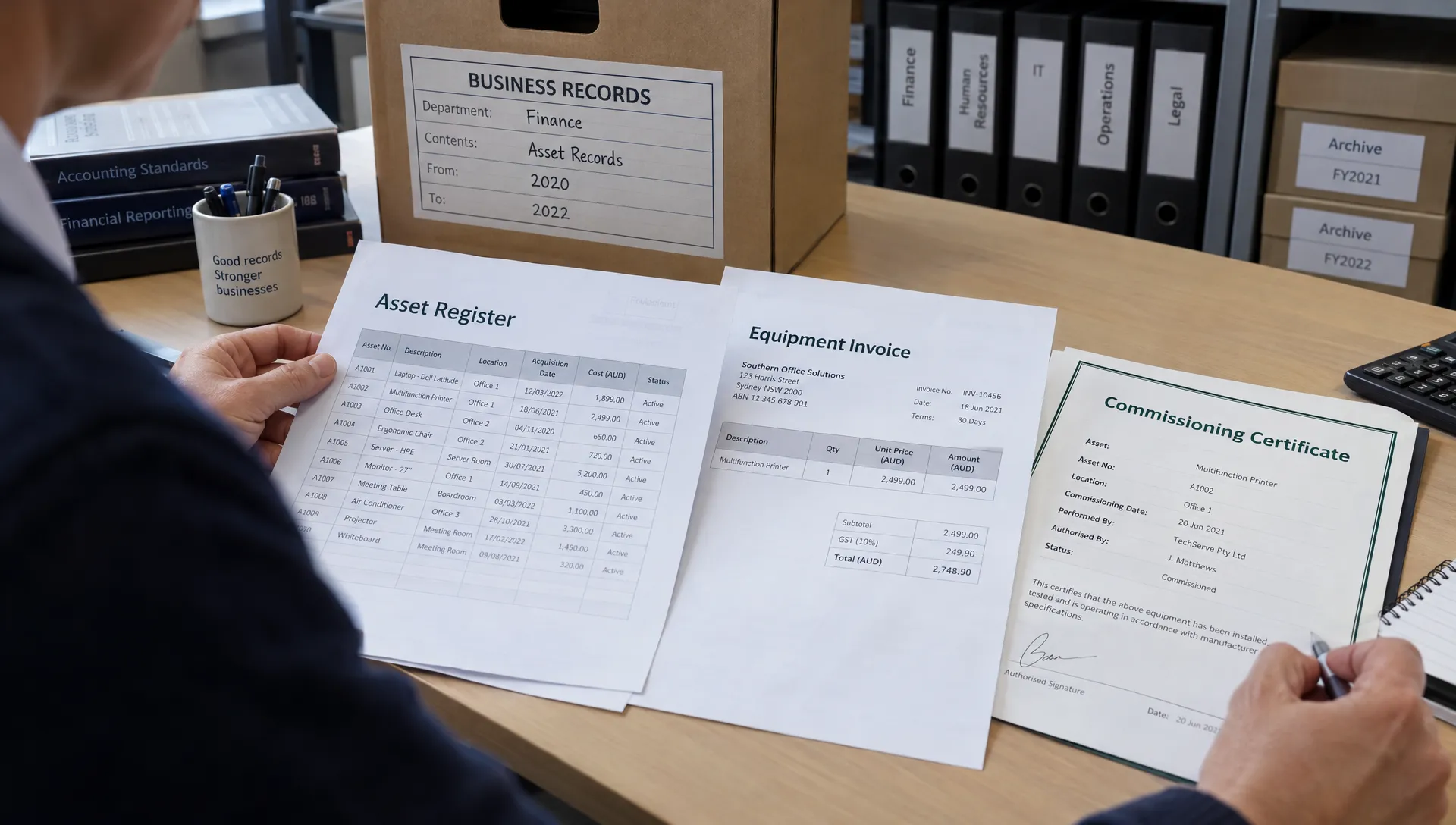
Our tax return assistance starts with a documented explanation of the error, not simply a replacement total. We compare the original treatment with the proposed treatment and retain the records supporting the difference.
Depending on the issue, we may need:
- The lodged return, assessment notice and original tax working papers.
- Bank records, invoices and ledger entries supporting the affected transactions.
- Investment statements, distribution statements or property settlement documents.
- Asset registers, acquisition records and previous depreciation calculations.
- Relevant correspondence explaining when and why the error was identified.
We request only the information relevant to the review and encourage secure handling of TFN and identity details. We never need a client's personal myGov password to assess an amendment.
This approach creates a clear audit trail. It also helps us distinguish a genuinely missing transaction from a duplicate entry, timing difference or misunderstanding of the original calculation.
We test tax treatment and flow-on effects
We review the underlying tax position before changing the return. A corrected bookkeeping entry does not, by itself, establish that a deduction is allowable or belongs in the income year under review.
Our tax return assistance also checks whether the same issue affects BAS, GST, payroll records, Superannuation or FBT. An income tax amendment does not automatically correct those separate obligations. We address any required changes through the appropriate reporting process.
| Issue identified | Income tax review | Related checks |
|---|---|---|
| Omitted business revenue | Assess the amount and correct income year | Reconcile sales records and assess any BAS or GST correction |
| Equipment recorded as an ordinary expense | Review immediate deductibility or capital allowances | Check the asset register and future decline-in-value calculations |
| Incorrect investment disposal calculation | Recalculate the capital gain or loss | Review cost-base evidence and carried-forward capital losses |
| Revised trust distribution information | Verify the beneficiary's reporting treatment | Check consistency with trust records and other affected returns |
For multi-entity businesses, our approach to managing complex ATO obligations provides the broader compliance context. We do not change distributions or legal entitlements merely to achieve a preferred tax result.
We use automation without removing professional judgement
We use AI-driven automation to streamline financial workflows and reduce repetitive processing. For amendments, we focus those workflows on organising evidence and supporting comparisons between source records, accounting information and tax calculations.
Our tax return assistance combines that digital efficiency with professional judgement. Automation can support faster processing, greater accuracy and more timely financial visibility, but it cannot independently establish deductibility, tax residency or the legal character of a transaction.
We retain human review over the proposed treatment and the explanation supporting it. When the source records are incomplete or inconsistent, we investigate rather than treating an automated output as conclusive.
The wider benefit is better information for management. Once we resolve the underlying discrepancy, cleaner accounting records can support more reliable forecasts and reduce the effort required at the next reporting cycle.
We explain the outcome before lodging
Before submission, we explain the proposed changes, their basis and the estimated tax impact. We identify any unresolved assumptions and obtain approval for the amendment through the appropriate authorised process.
We also assess whether a voluntary disclosure is relevant where an error has understated tax. Depending on the circumstances and timing, a voluntary disclosure may reduce some penalties. It does not automatically remove interest or the underlying tax liability.
Our tax return assistance includes reviewing the amended assessment against the submitted calculations and identifying any difference requiring follow-up. We do not promise a particular ATO processing time or assume that lodging an amendment extends an existing payment deadline.
Where additional tax is expected, we incorporate it into cash-flow planning. Where a refund is expected, we check whether outstanding tax debts may affect the amount ultimately received.

An equipment correction shows why technical evidence matters
Consider a hypothetical manufacturer that discovers a machinery upgrade was recorded entirely as repairs. We would not automatically replace the expense with depreciation. We would examine the work performed, the assets involved and the tax rules applying to that income year.
When equipment is designed, manufactured or commissioned through technical providers such as industrial engineering provider BKL, specifications and handover records can supplement the invoices. Those documents help establish whether the expenditure relates to maintenance, replacement components or a new asset. The engineering documentation informs our analysis; it does not determine the Australian tax outcome.
We also examine when an asset was first used or installed ready for use for a taxable purpose, rather than relying only on the invoice date.
In this situation, our tax return assistance connects the correction with the asset register and future deductions. We can then assess whether later returns also require attention and whether the accounting records need a corresponding adjustment.
We turn the correction into stronger financial controls
An amendment should resolve the historical issue and reveal why it occurred. We investigate whether the cause was missing documentation, an unclear approval process, inconsistent coding or a failure to reconcile related records.
Our tax return assistance therefore supports more than retrospective compliance. We use the findings to recommend practical controls, such as a review of asset purchases before year-end, a reconciliation of investment statements or a documented process for revised distribution information.
We connect those improvements with Strategic Advisory and Corporate Growth. Reliable figures support capital expenditure decisions, financing discussions and cash-flow forecasts. They also help directors distinguish operating performance from one-off tax adjustments.
Our review of company tax return errors that attract ATO attention explains related risk indicators. For an amendment, however, we focus first on the specific evidence and correction required, not on making assumptions about whether the ATO will review the return.
Frequently asked questions
Can we amend a return lodged by another accountant? We can assess the return and supporting records even where another adviser prepared the original lodgment. We first confirm authority to act, obtain the relevant information and establish the basis for any proposed change.
Can we amend more than one income year? We assess each year separately for its amendment deadline and tax treatment. A recurring error may affect several returns, but we do not assume that every year remains open for amendment.
Will an amendment trigger an ATO audit? We cannot predict whether the ATO will review a particular amendment. We focus on an accurate submission, a clear explanation and evidence that supports the changes. An amendment does not provide immunity from review.
Does tax return assistance guarantee a refund or remove penalties? Our tax return assistance establishes the correct position, which may involve additional tax rather than a refund. We assess any penalty or interest exposure separately and explain whether a voluntary disclosure or remission request is appropriate. Outcomes depend on the facts and applicable rules.
Next steps: how we can help
We recommend starting with the lodged return, assessment notice and a short explanation of the suspected error. Our team can then assess the deadline, identify missing evidence and explain the appropriate correction pathway before proceeding.
Drawing on 25 years of professional experience, we support clients across Australia through integrated services in Adelaide, Sydney and Melbourne. We combine tax review, accounting and strategic advice so that a correction strengthens financial management rather than becoming another isolated compliance task.
We invite business owners, directors and investors to contact Perfect Accounting & Tax Services for a consultation. We can discuss the amendment, its potential cash-flow consequences and how our automated accounting workflows can help prevent the same issue from recurring.