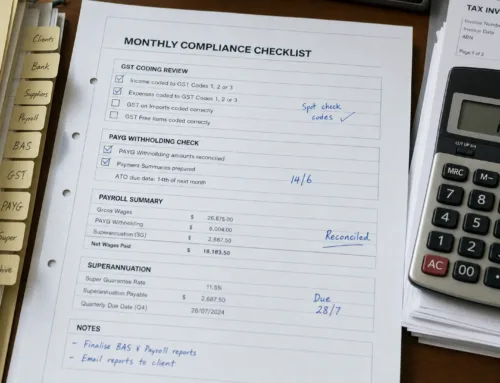


For Australian businesses, tax is one of the most underused growth levers. Many owners still treat it as a year-end obligation, something to finalise once the numbers are already locked in. In our experience, that mindset leaves cash flow, deductions, governance and strategic timing on the table.
Effective tax help for business is not limited to preparing an income tax return. It connects BAS, GST, payroll, Superannuation, FBT, entity structure, management reporting and commercial planning into one operating system. When that system is accurate and timely, directors can make better decisions about hiring, asset purchases, pricing, debt, expansion and distributions.
Across Adelaide, Sydney, Melbourne and regional Australia, we see the same pattern. Businesses grow more confidently when compliance data becomes decision data. With the right advisory support and AI-driven accounting workflows, tax stops being a backward-looking cost and becomes a tool for protecting margins, funding growth and reducing ATO risk.
What tax help for business means in 2026
In 2026, business tax support should be broader than annual lodgement. Australian business owners now operate in a more data-driven compliance environment, with ATO matching, Single Touch Payroll, GST reporting, contractor obligations and Superannuation requirements all connected to digital records.
A growth-focused approach includes accurate compliance, but it also considers how tax affects liquidity, risk and return. That means reviewing the business before major decisions are made, not after the financial year has closed.
| Area of support | Basic tax compliance | Growth-focused tax help |
|---|---|---|
| Income tax | Prepare and lodge returns | Plan profit timing, deductions, losses and distributions |
| BAS and GST | Lodge quarterly or monthly activity statements | Improve GST coding, cash flow forecasting and working capital visibility |
| Payroll and Superannuation | Process wages and meet reporting deadlines | Strengthen payroll controls, contractor classification and super funding discipline |
| Business structure | Maintain existing entities | Review whether the structure still suits scale, risk, funding and succession |
| Reporting | Produce historical reports | Use real-time financial data for pricing, hiring and investment decisions |
We view bookkeeping and compliance as the foundation, not the finish line. If the base data is unreliable, every strategic decision built on it is weaker. If the base data is accurate, current and well structured, advisory work becomes practical and measurable.
Turning compliance into decision-quality data
Every BAS cycle, payroll run and reconciliation tells a story about the business. Revenue concentration, margin pressure, late-paying customers, rising wage costs and stock inefficiencies often show up in the accounts before they become visible in the bank balance.
That is why our team places significant emphasis on data quality. We use AI-driven automation to streamline transaction capture, coding checks and exception detection, but professional judgement remains essential. Automation can speed up the workflow and highlight anomalies. A qualified adviser interprets those signals in the context of Australian tax law, your industry and your commercial objectives.
For example, a growing e-commerce business may need better separation between stock purchases, freight, merchant fees and advertising costs. A property developer may need more disciplined project cost tracking and GST treatment. A professional services firm may need sharper visibility over work in progress, contractor costs and director remuneration.
If you want a deeper view of the records that support this process, we have also outlined what Australian small business owners should track throughout the year. The practical point is simple: better records produce better tax outcomes, but they also produce better management decisions.
Protecting cash flow through GST, BAS and PAYG planning
Cash flow is often where tax planning has the fastest commercial impact. A profitable business can still feel under pressure if GST, PAYG withholding, PAYG instalments and Superannuation are not forecast properly.
We often help clients move from reactive payment management to forward-looking tax provisioning. Instead of discovering the BAS liability at the end of the quarter, we build workflows that show expected liabilities progressively. This gives directors time to adjust drawings, defer non-essential spending, manage debtor collections or plan funding.
GST timing is especially important for businesses with large input costs, deposits, progress claims or seasonal revenue. Construction, property, retail, hospitality, logistics and professional services can all experience mismatches between invoices issued, cash received and tax payable. A tax adviser should help you understand whether your reporting basis, invoicing practices and systems are supporting cash flow or adding avoidable strain.
PAYG instalments also deserve attention. Instalments based on prior-year performance may not reflect current trading conditions. If profit has materially changed, reviewing instalment settings can help avoid underfunding tax or overpaying cash that the business needs for growth. This must be handled carefully, because incorrect variations can create penalties or interest.
Structuring for scale across Australia
The right structure depends on risk, ownership, funding, succession, asset protection, family objectives and tax efficiency. A sole trader, company, trust, partnership, SMSF or group structure can each be appropriate in different circumstances. The problem is not that one structure is always better. The problem is that many businesses keep operating through structures that were suitable five years ago but no longer support the current strategy.
As businesses expand across Australia, structural complexity increases. Payroll obligations, state-based considerations, contractor arrangements, leases, financing, related-party transactions and inter-entity charges all require stronger governance. A company operating in Adelaide with new teams in Sydney and Melbourne needs consistent reporting standards, clear tax responsibilities and a reliable process for monitoring obligations across locations.
We do not treat structure reviews as a once-only exercise. They should be revisited when revenue grows materially, ownership changes, new investors enter, assets are acquired, debt is refinanced or succession becomes relevant. For high-net-worth individuals and family-owned businesses, the tax position of the operating entity also needs to be considered alongside personal wealth, trusts, SMSFs, property holdings and estate objectives.

Industry-specific tax help creates better growth decisions
Different industries carry different tax risks. A generic checklist rarely captures the commercial reality of a business model.
A medical specialist has different issues from a civil construction firm. A SaaS company has different timing, R&D and investor reporting considerations from a hospitality group. A property developer has different GST and financing risks from a creative agency. Even within the trade services sector, a business handling emergency callouts, subcontractors, vehicles, inventory and multi-location scheduling has a very different tax profile from a small office-based consultancy. International examples such as the fast-response trade services model show how operational complexity can quickly create tax and reporting complexity when a business scales.
| Business type | Common tax focus areas | Growth opportunity |
|---|---|---|
| Tradies and construction firms | GST, TPAR, subcontractors, vehicles and equipment | Stronger project margins and better cash flow timing |
| Professional services firms | PSI, payroll, contractor arrangements and director remuneration | Better profit extraction and scalable team structures |
| E-commerce and retail | Stock, GST, merchant fees, freight and platform income | Clearer product margins and inventory decisions |
| Property investors and developers | GST, capital allowances, interest, entity structure and timing | Improved feasibility analysis and risk control |
| Tech and SaaS businesses | Revenue recognition, payroll, R&D records and investor reporting | Better funding readiness and management visibility |
| Hospitality groups | Payroll, Superannuation, FBT, GST and cash controls | Stronger wage cost control and compliance confidence |
This is where advisory work becomes practical. We identify the tax settings that influence commercial decisions, then align reporting so management can act early.
Reducing ATO risk without slowing the business
Growth often brings complexity, and complexity increases the chance of error. The goal is not to slow decision-making. The goal is to build controls that allow the business to move quickly without creating avoidable exposure.
ATO risk commonly arises from weak substantiation, poor GST coding, late Superannuation, incorrect contractor treatment, FBT gaps, Division 7A issues, private expenses in business accounts, unreviewed director loans and inconsistent payroll records. These issues can sit unnoticed until a review, audit or funding process forces them into view.
We prefer to deal with these matters during the year. A quarterly or monthly review process can identify discrepancies early, before they become expensive. That is particularly relevant in 2026, as businesses continue adapting to legislative and administrative changes. We have summarised key issues in our guide to business tax changes affecting 2026, including developments that affect cash flow, Superannuation and deductibility.
Strong tax governance also improves commercial credibility. Banks, investors, acquirers and major clients increasingly expect clean financial records, reliable reporting and evidence of compliance. For companies considering finance, expansion, acquisition or exit, tax discipline is part of enterprise value.
Why AI-driven accounting workflows matter
AI and automation do not remove the need for professional advice. They change the quality and speed of the information available for that advice.
In a traditional workflow, business owners may wait weeks or months to see reconciled accounts. By then, the opportunity to correct course may have passed. With automated data capture, bank feeds, rules-based coding, exception reports and digital approval processes, our team can review cleaner information sooner.
This creates several advantages:
- Faster detection of coding errors, missing invoices and unusual transactions
- More reliable BAS and GST preparation
- Better visibility over payroll, Superannuation and contractor costs
- Earlier identification of cash flow pressure
- Stronger management reporting for directors and stakeholders
The technology is only valuable when it is implemented with tax knowledge and commercial discipline. A system can automate a transaction. It cannot determine whether the transaction supports the business strategy, whether the structure is still appropriate or whether the tax position aligns with the director's broader objectives. That is where strategic advisory remains essential.
Our role is to combine automation with professional interpretation. We use digital workflows to reduce administrative drag, then focus our advisory time on higher-value decisions.
What a business tax adviser should review year-round
A business should not wait until May or June to begin tax planning. By then, many options have already narrowed. Year-round review is more effective because it connects financial performance with operational decisions as they occur.
Key review areas include reconciliations, GST treatment, payroll and Superannuation, FBT exposure, asset purchases, stock levels, debtor ageing, director loans, related-party transactions, profit forecasts and upcoming tax payments. We also review whether the management reports are answering the questions directors actually need answered.
For a more detailed framework, our team has set out what should be included in a year-round review process. The main principle is that tax should be reviewed at the same cadence as management decisions. If the business makes monthly hiring, pricing and funding decisions, the tax and financial data should be current enough to support them.
Tax help across growth stages
Tax advice should evolve as the business evolves. A startup does not need the same support as a multi-site company preparing for investor due diligence. A mature family business planning succession has different priorities again.
| Growth stage | Tax help should focus on | Strategic outcome |
|---|---|---|
| Startup or early-stage business | Registrations, ABN, TFN, GST, payroll setup and accounting systems | Clean foundations and fewer costly corrections later |
| Growing SME | BAS discipline, cash flow forecasts, tax planning and management reporting | Better control over profit, tax and reinvestment capacity |
| Multi-location business | Payroll controls, entity structure, reporting consistency and governance | Scalable operations across Adelaide, Sydney, Melbourne and beyond |
| High-growth company | Funding readiness, investor reporting, tax risk reviews and incentive planning | Stronger credibility with financiers and stakeholders |
| Established or exit-focused business | Succession, CGT planning, retained earnings, group structure and due diligence | Better preparation for sale, transfer or long-term wealth planning |
The common thread is visibility. Directors make stronger decisions when tax liabilities, risks and opportunities are visible before they affect cash flow or negotiations.
Frequently Asked Questions
When should a business seek tax help? A business should seek tax help before major decisions such as hiring, purchasing assets, restructuring, expanding interstate, taking on investors or preparing for sale. Early advice usually gives directors more options than advice sought after the financial year ends.
Is tax help only relevant for companies? No. Sole traders, trusts, partnerships, SMSFs, property investors, family groups and high-net-worth individuals can all benefit from structured tax advice. The right approach depends on the entity, income type, risk profile and growth strategy.
How does tax planning improve cash flow? Tax planning improves cash flow by forecasting GST, PAYG, income tax, payroll and Superannuation obligations ahead of time. This allows the business to plan funding, manage drawings, time expenditure and avoid unexpected pressure from ATO liabilities.
Can automation replace a tax adviser? Automation improves speed and accuracy, but it does not replace judgement. We use AI-driven workflows to improve data quality and reporting, then apply professional analysis to tax law, commercial strategy and risk management.
Can our team support businesses outside one city? Yes. We support clients across Australia with integrated service capabilities in Adelaide, Sydney and Melbourne. Our digital workflows allow consistent reporting, while our advisory process remains tailored to local operations and national growth plans.
Next steps: How we can help
If your business is growing, tax should be part of the strategy, not a once-a-year compliance exercise. Our team helps Australian business owners, directors and high-net-worth individuals build stronger financial systems, reduce ATO risk and use tax planning to support corporate growth.
We can assist with:
- Business tax planning and income tax compliance
- BAS, GST, payroll and Superannuation workflows
- Virtual CFO services and management reporting
- Entity structure reviews and strategic advisory
- ATO correspondence, audit support and late return assistance
- AI-driven accounting automation for faster, cleaner financial visibility
With 25 years of professional experience, we combine technical tax knowledge with modern automation to give directors clearer information and better control. Whether you operate in Adelaide, Sydney, Melbourne or across multiple Australian locations, we can help turn your accounting function into a strategic asset.
Contact Perfect Accounting & Tax Services to arrange a consultation and learn how our automated accounting workflows can support your next stage of growth.