

Tax for small business in Australia is no longer a once-a-year exercise. For business owners, directors and investors, the quality of the tax outcome depends on what is tracked throughout the year, not what is reconstructed in June.
We often see tax risk arise from small gaps: an unreconciled merchant account, missing GST evidence, director payments treated casually, or payroll records that do not align with Superannuation obligations. Individually, these issues may look administrative. Collectively, they affect cash flow, ATO exposure, lending capacity and strategic decision-making.
The practical objective is clear: build a tracking system that supports compliance and gives management real-time visibility. When bookkeeping, BAS and tax records are structured correctly, they become the foundation for Strategic Advisory and Corporate Growth.
Why small business tax tracking matters in 2026
Australian small businesses operate in a data-rich compliance environment. The ATO increasingly cross-checks income, payroll, GST, bank feeds, contractor payments and digital platform activity. That does not mean business owners should fear technology. It means records must be accurate, consistent and explainable.
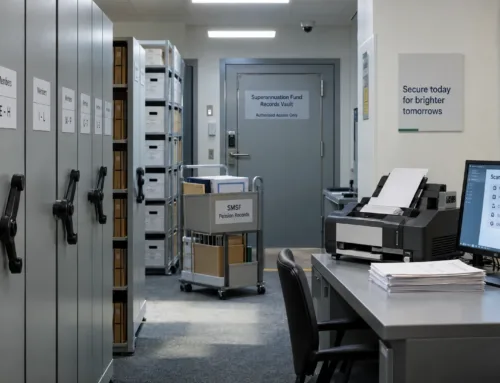
The ATO states that business records generally need to be kept for five years and must be clear enough to explain transactions. The official ATO record-keeping guidance remains a useful baseline, but we recommend going further. Strong records should help owners answer commercial questions, not simply satisfy minimum legal requirements.
For example, a clean expense ledger should not only support deductions. It should show margin trends, cost creep, supplier dependency and whether a business can afford new staff, equipment or expansion into another state.
The core tax records every small business owner must track
The right tracking framework depends on structure, industry and growth stage. A sole trader consultant will have different requirements from a construction company, hospitality group, e-commerce store or professional services firm operating through a company and discretionary trust.
Still, most Australian small businesses should track the following areas consistently.
| What to track | Why it matters for tax | Recommended cadence |
|---|---|---|
| Sales income | Supports income tax, GST, BAS and cash-flow forecasting | Daily or weekly |
| Business expenses | Substantiates deductions and margin analysis | Weekly |
| GST collected and GST paid | Reduces BAS errors and ATO review risk | Monthly, even if BAS is quarterly |
| PAYG withholding | Ensures employee tax withheld is correct and lodged | Each pay run |
| Superannuation | Supports Superannuation Guarantee compliance and cash planning | Each pay run |
| Assets and equipment | Determines depreciation, instant asset write-off treatment and capital gains records | On purchase and EOFY review |
| Stock and work in progress | Affects taxable income and gross margin accuracy | Monthly or quarterly |
| Loans, drawings and director payments | Prevents misclassification and Division 7A issues | Monthly |
| Motor vehicle and travel use | Supports deduction claims and FBT analysis | Ongoing, with logbook where required |
| Source documents | Provides evidence for deductions, GST credits and ATO queries | At transaction date |
This table is not simply a compliance checklist. It is a management dashboard. When these categories are tracked correctly, tax planning becomes far more precise.

Income tracking: more than bank deposits
Income tracking should reconcile to invoices, point-of-sale systems, merchant facilities, platform receipts and bank deposits. This is particularly important for e-commerce businesses, tradies, consultants, creatives, property-related businesses and operators using multiple payment channels.
A common mistake is treating the bank account as the complete sales record. It is not. Bank deposits may be net of merchant fees, refunds, chargebacks, platform commissions or foreign exchange adjustments. If the accounting system records only net deposits, GST and revenue may be misstated.
We recommend tracking income by source. Separate categories for direct invoices, online sales, marketplace income, subscriptions, retainers and cash sales provide clearer tax reporting and better business intelligence.
For fast-growing businesses, this also supports valuation. A company with clean recurring revenue data is easier to finance, restructure or sell than one relying on reconstructed annual totals.
Expense tracking: deductions require purpose and evidence
Australian tax law generally allows deductions for expenses incurred in earning assessable income, provided they are not private, capital or specifically denied. The practical issue is evidence.
Every expense should answer three questions:
- What was purchased?
- How did it relate to the business?
- Is there a valid invoice, receipt or digital record?
Weak expense descriptions create risk. “Miscellaneous”, “general expenses” and “owner reimbursements” may be convenient during the year, but they are poor categories for tax review and advisory analysis.
We prefer a system where receipts are captured digitally at the point of transaction, matched to bank feeds and coded to consistent categories. AI-driven automation can reduce manual entry, flag unusual transactions and identify missing GST details. Human review remains essential, especially where judgement is required, but automation improves speed and accuracy.
GST and BAS: track monthly, even if lodging quarterly
If a business is registered for GST, it must track taxable sales, GST-free sales, input-taxed sales, GST credits, adjustments and BAS liabilities. The ATO provides detailed guidance on registering for GST, including the general $75,000 GST turnover threshold for most businesses.
Many small businesses lodge BAS quarterly, but we do not recommend waiting until quarter-end to review GST. Monthly reconciliations help identify issues early, such as incorrectly claiming GST on bank fees, wages, residential rent, overseas suppliers or transactions without tax invoices.
GST errors can also distort cash flow. A profitable quarter can still create pressure if GST collected has been spent before the BAS is due. We often advise clients to track GST payable as a separate cash-flow line, not as available working capital.
Payroll, PAYG withholding and Superannuation
Payroll is one of the highest-risk areas for small business tax compliance. Owners must track gross wages, PAYG withholding, allowances, deductions, leave, termination payments, contractor arrangements and Superannuation Guarantee obligations.
For 2025-26, the Superannuation Guarantee rate is 12%. Employers should also prepare for payday super, scheduled to commence from 1 July 2026, which will require much tighter alignment between payroll and super payment workflows.
The ATO’s Superannuation Guarantee guidance is essential reading for employers. Late or incorrect super can create non-deductible liabilities, penalties and employee relations risk.
We recommend that payroll records be reviewed every pay run, not just at BAS or EOFY. This is particularly important for hospitality, construction, medical practices, logistics, professional firms and businesses with casual, part-time or award-based employees.
Assets, equipment and depreciation
Small businesses must track business assets from purchase date to disposal. This includes vehicles, tools, machinery, computers, fit-outs, software and equipment.
The key records include purchase invoices, finance agreements, installation costs, private-use estimates, depreciation treatment and disposal proceeds. Without these records, businesses can miss deductions, overclaim expenses or create errors in capital gains calculations.
Asset tracking also informs strategic planning. Before buying equipment near 30 June, owners should model tax outcomes, cash-flow impact, finance costs and operational return. A deduction is valuable only if the asset supports genuine commercial performance.
We regularly see businesses purchase assets for tax reasons without considering whether the cash would be better used for staff, systems, debt reduction or working capital. Tax planning should support business strategy, not override it.
Stock, work in progress and project costs
Inventory and work in progress are often under-tracked in small businesses. Retailers, manufacturers, builders, developers, medical clinics, hospitality groups and e-commerce operators should pay close attention to stock movements and project costing.
If stock records are inaccurate, gross profit becomes unreliable. That affects tax, pricing, financing and management decisions. For builders and consultants, poor work-in-progress tracking can also distort revenue recognition and profit timing.
We recommend periodic stocktakes, supplier reconciliation and margin review by product, job or project. This is where digital systems create significant value. Integrated accounting, inventory and project management workflows can reduce manual errors and provide early warning when margins are deteriorating.
Loans, drawings and director payments
Owner transactions require careful tracking. The tax treatment differs depending on whether the business operates as a sole trader, partnership, company or trust.
For sole traders, drawings are not wages, but business profit is still taxable to the individual. For companies, payments to directors and shareholders can trigger salary, dividends, loan account movements or Division 7A issues. For trusts, distributions must align with trust deeds, resolutions and beneficiary entitlements.
This is an area where casual bookkeeping creates serious tax risk. We recommend monthly review of loan accounts, director reimbursements, personal expenses paid by the business and related-party transactions.
If the business has grown beyond its original structure, tracking owner payments can also reveal whether restructuring is required. We have discussed the foundation issues for sole traders in our guide to sole trader and tax setup in Australia.
Motor vehicles, home office and mixed-use expenses
Mixed-use expenses are common in small business. Motor vehicles, phones, internet, home office costs and travel may have both private and business components. These expenses need clear records and reasonable apportionment.
For motor vehicles, logbooks and odometer readings may be required depending on the claim method and entity structure. For home office expenses, owners should track usage patterns, running costs and supporting evidence. For company-owned cars, FBT may also need to be considered.
We recommend setting rules at the start of the financial year. Waiting until tax time to estimate private use is inefficient and increases review risk.
Digital transformation: turning tax records into management intelligence
Automation is now a practical requirement, not a luxury. Modern accounting workflows can capture invoices, reconcile bank feeds, classify transactions, identify anomalies and produce timely dashboards.
The objective is not to replace professional judgement. It is to remove low-value manual processing so advisers and owners can focus on risk, strategy and growth.
For businesses reviewing broader operational automation beyond accounting, an external AI opportunity audit and custom automation partner can help identify where AI-enabled workflows may reduce administrative friction across sales, operations and reporting. When those systems connect properly with accounting records, the tax function becomes more accurate and more strategic.
At Perfect Accounting & Tax Services, our AI-driven processes are designed to improve record quality, speed up reconciliations and give clients clearer financial visibility. That allows us to advise earlier, rather than react after the year has ended.
A practical monthly tax tracking rhythm
Small business owners do not need complexity. They need discipline. A strong monthly rhythm can prevent most tax surprises.
We recommend reviewing the following every month:
- Bank reconciliations, credit cards and loan accounts.
- Sales income by source, including merchant and platform receipts.
- GST position and estimated BAS liability.
- Payroll, PAYG withholding and Superannuation obligations.
- Debtors, creditors and cash-flow forecast.
- Asset purchases, finance transactions and private-use items.
- Owner drawings, director loans and related-party payments.
This monthly process should take less time as systems mature. The first few months may reveal coding issues, missing records or inconsistent processes. That is valuable. It is better to find gaps in August or February than during an ATO review or urgent finance application.
Warning signs your tracking system is not strong enough
We generally become concerned when business owners cannot access accurate financial reports within a reasonable timeframe. Delayed reporting often indicates underlying problems in coding, reconciliations or document capture.
Other warning signs include repeated BAS adjustments, large suspense accounts, unexplained director loans, unreconciled payroll, missing tax invoices, stock figures based on estimates, and business expenses regularly paid from personal accounts.
These issues are not merely administrative. They can affect tax deductions, GST credits, loan covenants, business valuations and director confidence.
How we can help
Our team supports small businesses, company directors and high-net-worth individuals across Australia, with integrated service capabilities in Adelaide, Sydney and Melbourne. We combine 25 years of professional experience with AI-driven accounting workflows to help clients build accurate, compliant and strategically useful financial systems.
We can assist with BAS, bookkeeping, payroll, tax planning, late lodgements, audit support, virtual CFO advisory and automation implementation. More importantly, we help owners understand what the numbers mean and how to use them for better decisions.
If your records are accurate but not yet strategic, we can help elevate the system. If your records are incomplete, we can help stabilise compliance first, then build a stronger advisory framework.
Frequently Asked Questions
What records should a small business keep for tax in Australia? A small business should keep records of income, expenses, GST, BAS, payroll, Superannuation, assets, loans, stock, motor vehicle use and source documents such as invoices and receipts. Records generally need to be kept for five years.
How often should small business tax records be reviewed? We recommend monthly reviews, even if BAS is lodged quarterly. Monthly tracking helps identify GST errors, payroll issues, cash-flow pressure and missing documents before they become year-end problems.
Do sole traders need accounting software? Accounting software is not always legally mandatory, but it is highly advisable for most sole traders. It improves record accuracy, separates business and personal transactions, and supports GST, income tax and cash-flow tracking.
What is the biggest tax tracking mistake small business owners make? The biggest mistake is relying on bank balances rather than reconciled financial records. A bank balance does not show GST liabilities, unpaid bills, tax reserves, super obligations or profit quality.
Can automation reduce tax risk? Yes, when implemented correctly. Automation can capture documents, reconcile transactions and flag anomalies faster than manual processes. However, professional review remains essential for judgement-based areas such as deductions, Division 7A, FBT, structuring and tax planning.
Ready to strengthen your small business tax tracking?
Tax compliance should not be a scramble at lodgement time. It should be a structured, data-driven process that supports cash flow, risk management and corporate growth.
Contact Perfect Accounting & Tax Services to discuss your accounting workflow, BAS process, payroll compliance or broader tax planning needs. Our team can help you move from reactive record-keeping to a smarter, automated financial system built for Australian tax requirements and strategic decision-making.