

Visa holders often enter Australia with a clear commercial or career objective: take up an executive role, launch a business, invest in property, scale a company, or build a pathway to permanent residency. Tax can feel secondary until the first payslip, BAS deadline, property purchase, dividend payment, or ATO letter arrives.
In practice, tax in Australia for foreigners is not determined by citizenship alone. It depends on your tax residency, the source of your income, your visa conditions, the way your business or assets are structured, and whether any double tax agreement applies.
We regularly see sophisticated professionals and investors make expensive assumptions. A temporary visa holder may be an Australian tax resident. A foreign citizen may be entitled to the tax-free threshold. A permanent resident may still have unresolved overseas tax exposure. A company director may trigger Australian tax issues even before drawing a salary.
This guide explains the core obligations visa holders should understand before they lodge, invest, employ staff, or expand across Australia.
Immigration residency and tax residency are different
Your visa status and your tax residency status are related, but they are not the same.
Immigration law decides whether you can live, work, study, invest, or operate in Australia. Tax law decides how the ATO taxes your income and gains.
The ATO generally considers several residency tests, including whether you reside in Australia, your domicile, whether you are in Australia for 183 days or more, and certain Commonwealth superannuation rules. The ATO provides detailed guidance on working out your residency status for tax purposes.
For visa holders, the practical question is not simply, “What visa do I hold?” It is, “Where is my real economic life managed from?”
Key indicators can include:
- Your intended length of stay in Australia
- Whether your spouse or children live in Australia
- Whether you lease or own a home here
- Whether you maintain a home overseas
- Where your employment, company management, investments, and banking are centred
- Whether you have Australian business registrations, directorships, or recurring income sources
A senior executive on a multi-year employer-sponsored visa may become an Australian tax resident. A foreign investor who visits briefly to inspect property may remain a foreign resident. A digital founder moving between countries may need a closer review, particularly if business decisions are made from Australia.
This distinction drives almost every other obligation.
Common tax profiles for visa holders
The following table provides a strategic overview. It is not a substitute for advice, but it helps frame the issues our team reviews when assessing a visa holder’s position.
| Tax profile | Common examples | Australian tax treatment in broad terms | Key risk |
|---|---|---|---|
| Australian tax resident | Long-term skilled visa holder, partner visa holder, executive living in Australia | Generally taxed on worldwide income, subject to concessions and treaty rules | Failing to disclose overseas income, shares, trusts, crypto, or rental property |
| Foreign resident for tax purposes | Short-term visitor, offshore investor, non-resident landlord | Generally taxed only on Australian-sourced income | Incorrectly claiming resident tax rates or the tax-free threshold |
| Temporary resident for tax purposes | Temporary visa holder who is an Australian tax resident and meets specific conditions | May receive concessions for many foreign income and CGT items | Misunderstanding what is exempt and what must still be reported |
| Working holiday maker | Subclass 417 or 462 visa holder | Special working holiday maker tax rates may apply | Employer registration or withholding errors |
| Business owner or director | Founder, investor, consultant, property developer, company director | Obligations can include income tax, GST, PAYG withholding, BAS, Superannuation Guarantee, payroll tax, FBT, and company tax | Treating business receipts as personal cash flow instead of taxable business activity |
For professionals, directors, and high-net-worth families, the most important lesson is that tax status should be reviewed before transactions occur, not after year-end.
Tax File Number, income reporting, and withholding
Most visa holders who work or invest in Australia should apply for a Tax File Number (TFN). A TFN is not compulsory, but without one, employers and financial institutions may withhold tax at higher rates. The ATO explains how eligible individuals can apply for a TFN.
If you are employed, your employer reports your salary and wages through Single Touch Payroll. Your income statement is usually finalised after 30 June and becomes available through myGov. If you run a business, your reporting is more involved and may include ABN registration, GST, BAS, payroll, contractor reporting, and superannuation compliance.
The Australian income year runs from 1 July to 30 June. Individuals who lodge their own tax returns generally have a 31 October deadline, while registered tax agents may access extended lodgement dates depending on the circumstances.
A common issue for visa holders is split-year complexity. You may arrive partway through a year, leave before 30 June, or change from foreign resident to Australian resident during the year. That transition can affect tax rates, offsets, Medicare levy exposure, and foreign income reporting.
Resident, foreign resident, and temporary resident tax outcomes
Australian resident individuals generally have access to resident tax rates and may be able to claim the tax-free threshold. Foreign residents are taxed at different rates and generally do not receive the tax-free threshold.
For a current rates overview, we recommend reading our separate guide to tax rates in Australia for 2026. If your main issue is whether the tax-free threshold applies to your circumstances, our article on the tax-free threshold in Australia explains the common misconceptions.
Temporary resident rules are particularly important. A temporary resident for tax purposes is generally an individual who holds a temporary visa and satisfies certain conditions relating to Australian social security residency. Where the rules apply, Australia may not tax some foreign-sourced income and certain foreign capital gains. However, this is an area where details matter. Employment income, business income, trust distributions, foreign company interests, and asset disposals can each require separate analysis.
We treat temporary resident status as a planning opportunity, not a shortcut. The correct approach is to map income categories, asset locations, treaty positions, and expected residency changes before returns are prepared.
Foreign income, overseas assets, and double tax agreements
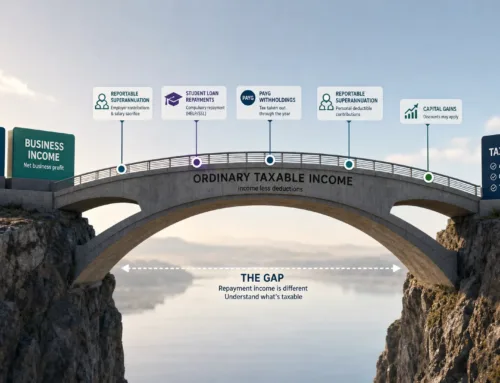
If you are an Australian tax resident, the starting point is that you must declare worldwide income unless a specific exemption applies. This can include overseas salary, consulting revenue, dividends, interest, rental income, pension income, trust distributions, business profits, crypto gains, and capital gains.
Foreign residents generally declare Australian-sourced income only. That may include Australian employment income, Australian rental income, Australian business income, and gains from taxable Australian property.
Double tax agreements can reduce the risk of being taxed twice, but they do not remove the need for careful reporting. In many cases, Australian tax residents can claim a foreign income tax offset for foreign tax already paid, subject to Australian rules.
For globally mobile clients, we usually review:
- Where each income stream is sourced
- Whether the client is resident in more than one country
- Whether a double tax agreement tie-breaker applies
- Whether foreign tax has been paid and documented
- Whether foreign exchange conversion has been calculated correctly
- Whether overseas entities create Australian reporting issues
US-connected taxpayers require particular care because US tax rules can continue to apply based on citizenship or green card status. We have covered this separately in our guide to US income and Australian tax reporting.

Business owners, company directors, and contractors on visas
Visa holders operating businesses in Australia face a broader compliance environment than employees. This is where bookkeeping becomes strategic infrastructure.
If you provide services, sell goods, operate an e-commerce store, run a consulting practice, develop software, or invest through a company, you may need to consider:
- ABN registration if you are carrying on an enterprise
- GST registration if turnover reaches the registration threshold
- BAS lodgement and GST reconciliation
- PAYG instalments for income tax
- PAYG withholding if you employ staff
- Superannuation Guarantee obligations for employees
- Payroll tax where wages exceed state or territory thresholds
- FBT where benefits are provided to employees or directors
- Director remuneration, dividends, and Division 7A loan issues
- Company tax residency and central management and control
The risk is not only penalties. Poor structure creates weak data, distorted margins, and unreliable cash flow forecasts. For growth-stage companies, that affects capital raising, loan applications, due diligence, and exit readiness.
Our team uses AI-assisted accounting workflows to automate transaction classification, identify unusual items, accelerate reconciliations, and give directors clearer real-time visibility. The objective is not just to lodge a BAS on time. It is to build a financial control layer that supports strategic advisory and corporate growth.
For directors with Australian companies, our article on company taxes in Australia expands on planning points such as GST, PAYG, superannuation, FBT, deductions, and director-related issues.
Property, capital gains, and foreign investor issues
Foreign investors and visa holders often underestimate the Australian tax consequences of property ownership.
Australian rental income must generally be reported if the property is located in Australia. Deductions may be available for interest, rates, repairs, property management fees, insurance, depreciation, and other costs, subject to substantiation and Australian tax rules.
Capital gains tax is also critical. Foreign residents are generally taxed on gains from taxable Australian property. Visa holders who become foreign residents before selling a former home may face unexpected outcomes, including restrictions on the main residence exemption. Foreign resident capital gains withholding can also apply to certain property transactions unless clearance certificates or variation processes are handled correctly.
For high-net-worth investors and developers, we review ownership structure before acquisition. The right structure may differ depending on whether the asset is a family home, investment property, development site, commercial property, or syndicate investment. We also consider land tax, GST on property transactions, financing, related-party loans, and future residency changes.
Superannuation and departing Australia
Many temporary visa holders are entitled to employer superannuation contributions if they are eligible employees under Australian law. The Superannuation Guarantee rate is 12% from 1 July 2025. Employers must also comply with Single Touch Payroll and superannuation reporting requirements.
If a temporary visa holder permanently leaves Australia and the visa has ceased to be in effect, they may be able to claim a Departing Australia Superannuation Payment (DASP). Tax is withheld from DASP payments, and the rate depends on the type of visa and fund component. Working holiday makers often face different withholding outcomes.
For employers, superannuation is a compliance obligation. For executives and high-income professionals, it is also a remuneration planning issue. Salary packaging, concessional contribution caps, excess contribution risks, and international pension interactions may all require review.
Medicare levy and private health considerations
Australian tax residents may be liable for the Medicare levy, generally calculated at 2% of taxable income, subject to thresholds and exemptions. Some temporary visa holders who are not entitled to Medicare may be eligible for a Medicare levy exemption, often requiring a Medicare Entitlement Statement from Services Australia.
The Medicare levy surcharge is a separate issue for higher-income individuals and families without appropriate private patient hospital cover. Visa holders should not assume that private health insurance automatically resolves all tax issues. The policy type, income level, family status, and Medicare entitlement position all matter.
This is an area where we often see preventable errors, particularly for professionals who arrive mid-year or change visa status during the year.
Record keeping: the foundation of defensible tax positions
The ATO expects taxpayers to maintain records that substantiate income, deductions, residency positions, foreign tax credits, capital gains, and business activity. As a practical rule, records should generally be kept for at least five years, and sometimes longer for assets subject to CGT.
For visa holders, strong records are especially important because facts drive residency and source-of-income analysis. We recommend maintaining clear evidence of arrival and departure dates, employment contracts, lease agreements, overseas tax assessments, bank statements, investment reports, property documents, trust statements, and foreign exchange calculations.
Automation can materially reduce compliance risk. Bank feeds, digital receipt capture, payroll integrations, document management, and AI-assisted exception reporting help identify missing records before lodgement deadlines. More importantly, they allow business owners and directors to monitor tax exposure during the year rather than after the year is closed.
Common mistakes visa holders should avoid
The most expensive errors are usually not technical mistakes. They are assumption errors.
We frequently see visa holders assume they are non-residents because they are not citizens. Others assume they are residents because they have been in Australia for more than six months. Both positions may be wrong depending on the facts.
Other common issues include failing to declare overseas income, using the wrong tax rate, ignoring temporary resident concessions, registering for an ABN when the arrangement is really employment, missing GST registration, underpaying superannuation, failing to track crypto transactions, and selling Australian property without CGT planning.
For company directors, the higher-risk issues include mixing personal and company funds, undocumented shareholder loans, late BAS lodgements, unpaid PAYG withholding, incorrect contractor classification, and weak payroll systems. These are not just compliance problems. They weaken governance and reduce enterprise value.
A strategic checklist before lodgement or investment
Before lodging a return, buying property, accepting a director role, or scaling a business in Australia, visa holders should ask five strategic questions.
| Question | Why it matters |
|---|---|
| What is my tax residency position for this income year? | It determines tax rates, foreign income reporting, Medicare levy exposure, and offsets. |
| Am I a temporary resident for tax purposes? | Concessions may apply, but they need to be documented and applied correctly. |
| Which income is Australian-sourced and which is foreign-sourced? | Source affects assessability, treaty treatment, and reporting. |
| Do I need an ABN, GST registration, BAS, payroll, or superannuation systems? | Business activity can trigger ongoing compliance obligations. |
| What will change if I leave Australia or become a permanent resident? | Residency changes can affect CGT, foreign assets, superannuation, and future planning. |
This checklist is deliberately strategic. A technically correct return is important, but a well-planned tax position should also support liquidity, investment strategy, governance, and long-term wealth protection.
Frequently Asked Questions
Do visa holders need to lodge an Australian tax return? Many do, especially if they earn Australian income, operate a business, receive Australian rental income, have tax withheld, or need to report foreign income as an Australian tax resident. Some low-income situations may not require lodgement, but a non-lodgement advice may still be appropriate.
Does being on a temporary visa mean I am a foreign resident for tax purposes? Not necessarily. A temporary visa holder can be an Australian tax resident if their living and economic circumstances support that conclusion. Visa status is only one part of the analysis.
Do foreign residents get the Australian tax-free threshold? Generally, foreign residents do not receive the tax-free threshold. Australian tax residents may be eligible, depending on the period of residency and other circumstances.
Do I need to declare income from overseas? If you are an Australian tax resident, you generally need to declare worldwide income unless a specific exemption applies, such as certain temporary resident concessions. Foreign residents generally report Australian-sourced income only.
Can visa holders run a business in Australia? Some visa holders can operate businesses, but immigration conditions must be checked separately from tax obligations. From a tax perspective, business activity may require ABN registration, GST registration, BAS lodgement, payroll systems, superannuation compliance, and proper accounting records.
What happens to my superannuation if I leave Australia? Temporary visa holders who permanently leave Australia and whose visa has ceased may be eligible to claim a Departing Australia Superannuation Payment. Withholding tax applies, and the rate depends on the visa and superannuation components.
Next steps: build a compliant and strategic tax position
For visa holders, Australian tax should not be treated as a once-a-year lodgement task. It is a framework for managing residency, income, investment risk, business growth, and future mobility.
Our team at Perfect Accounting & Tax Services supports individuals, directors, investors, and businesses across Australia, with integrated capabilities in Adelaide, Sydney, and Melbourne. We combine 25 years of professional experience with AI-driven automation to improve accuracy, reduce manual processing, and provide clearer financial visibility.
We can assist with tax residency reviews, individual tax returns, foreign income analysis, business structures, BAS and GST systems, payroll and superannuation compliance, property tax planning, audit support, and virtual CFO advisory.
If you hold a visa and have Australian income, assets, business interests, or overseas investments, contact our team for a consultation. We will help you move from reactive compliance to a structured, data-driven tax strategy that supports your financial health and long-term growth.