

When we provide tax help Australia-wide, we start with the evidence behind the return. To lodge a company tax return, we need the company’s identifying details, reconciled financial records, a calculation of taxable income, any required schedules and authorisation to lodge. We also confirm the correct income year, lodgment deadline and payment obligations.
For directors, the objective is not simply to submit figures. We need a defensible return that reflects the company’s transactions, identifies tax exposures and supports reliable cash-flow planning. A completed BAS or ASIC annual review does not replace this process.
The core records we need before preparation
We request a structured year-end information pack rather than an unfiltered collection of receipts. The exact requirements depend on the company’s activities, ownership and transactions.
| Information category | What we need | What it supports |
|---|---|---|
| Company identification | Legal name, TFN, ABN if held, ACN and current contact details | Correct identification of the taxpayer |
| Financial accounts | Trial balance, general ledger, profit and loss statement and balance sheet | Preparation and reconciliation of return disclosures |
| Banking and finance | Bank, credit card, loan and merchant facility statements | Verification of cash, debt and settlement balances |
| Trading records | Sales, purchases, stock records, debtors and creditors | Accurate income, expenses and working capital |
| Employment obligations | Payroll reports, Single Touch Payroll records and superannuation payment evidence | Reconciliation of wages and employment-related deductions |
| Assets and investments | Purchase and disposal documents, asset register and investment statements | Depreciation, capital gains and investment income calculations |
| Ownership and related parties | Shareholder details, director loan accounts, dividends and related-party agreements | Review of financing, distributions and disclosure obligations |
For efficient tax help Australia-wide, we distinguish documents that support the return from information that must actually be lodged. Financial statements generally support the calculations; we do not assume every supporting document must accompany the return.
Confirm the entity, income year and outstanding obligations
Before calculating tax, we verify the company’s tax residency, ownership structure and reporting period. Most Australian companies use a 30 June year-end, but an approved substituted accounting period changes the relevant reporting dates.
We also check whether the company is part of a tax consolidated group. A subsidiary’s income tax position may be dealt with through the head company rather than a separate return, so group membership must be established early.
We keep the company’s affairs separate from those of its directors, shareholders and associated trusts. A director’s personal return does not report the company’s business profit merely because the director owns all its shares.
Inactivity also requires review. We do not assume that a dormant company, a loss-making business or a cancelled ABN removes the obligation to lodge. We confirm whether a return or an appropriate non-lodgment notification is required.
This entity-level review makes tax help Australia-wide more reliable, particularly where ownership, residency or business activity has changed. Our guide to who must lodge an Australian tax return provides broader context across different taxpayer types.
Reconcile the accounts before calculating tax
We treat reconciled bookkeeping as the foundation for Strategic Advisory and Corporate Growth. Without it, directors cannot confidently distinguish taxable profit from available cash or assess how much funding the business needs.
Match balances to independent evidence
We reconcile bank and credit card balances to statements, check loan balances against lender records and investigate old clearing-account entries. For online businesses, we reconcile gross sales, platform fees, refunds and settlement deposits rather than treating net bank receipts as total revenue.
We also review year-end cut-off. Unpaid customer invoices, supplier bills, stock and work in progress can affect the accounts and require consideration under the applicable tax rules. Cash in the bank is not, by itself, a measure of taxable income.
Connect the accounts with BAS and payroll reporting
We compare annual turnover and GST records with lodged BAS, allowing for legitimate timing and classification differences. We reconcile wages and PAYG withholding with payroll reporting and review superannuation payment evidence.
Where applicable, we remove GST payable from income and claimable GST credits from expenses. We separately investigate private expenditure and transactions posted to director loan accounts.
When we deliver tax help Australia-wide, these reconciliations help prevent the same transaction being omitted, counted twice or classified inconsistently across reporting systems. They also give directors a stronger basis for forecasting tax payments and working-capital requirements.
Convert accounting profit into taxable income
Accounting profit is the starting point, not necessarily the amount on which company income tax is calculated. We prepare a tax reconciliation that explains each adjustment and retains supporting calculations.
A simplified example illustrates the distinction:
| Reconciliation item | Illustrative amount |
|---|---|
| Accounting profit before income tax | $180,000 |
| Add back non-deductible expenditure | $12,000 |
| Add back accounting depreciation | $8,000 |
| Deduct allowable tax depreciation | ($11,000) |
| Taxable income before other adjustments or losses | $189,000 |
We use this example only to explain the process. Actual adjustments depend on the company’s facts and the rules applying to the relevant income year.
Review deductions, losses and additional schedules
We examine provisions, entertainment, capital expenditure, superannuation timing differences and asset disposals. We also test the availability of carried-forward losses rather than automatically deducting the balance shown in last year’s accounts.
Director and shareholder transactions require particular attention. We review potential Division 7A exposures and any relevant repayment or agreement deadlines separately from the basic preparation timetable.
Depending on the circumstances, we may need capital gains, losses, international dealings or other schedules. We also verify eligibility and supporting evidence for any offsets or incentives claimed.
Our tax help Australia-wide includes checking the applicable company tax rate. We do not assume a company qualifies for the lower rate solely because its turnover is relatively small.
Confirm the lodgment method, deadline and approval
We lodge company returns through an appropriate company tax return channel, such as a registered tax agent’s systems or compatible Standard Business Reporting software. Where applicable, the ATO also provides a paper company return. We do not use myTax, which is designed for individual returns.
We confirm the company’s actual lodgment and payment dates with the Australian Taxation Office. Dates vary according to circumstances, including lodgment history and eligibility for a tax agent lodgment program. Engaging an adviser does not automatically extend an existing or overdue deadline.
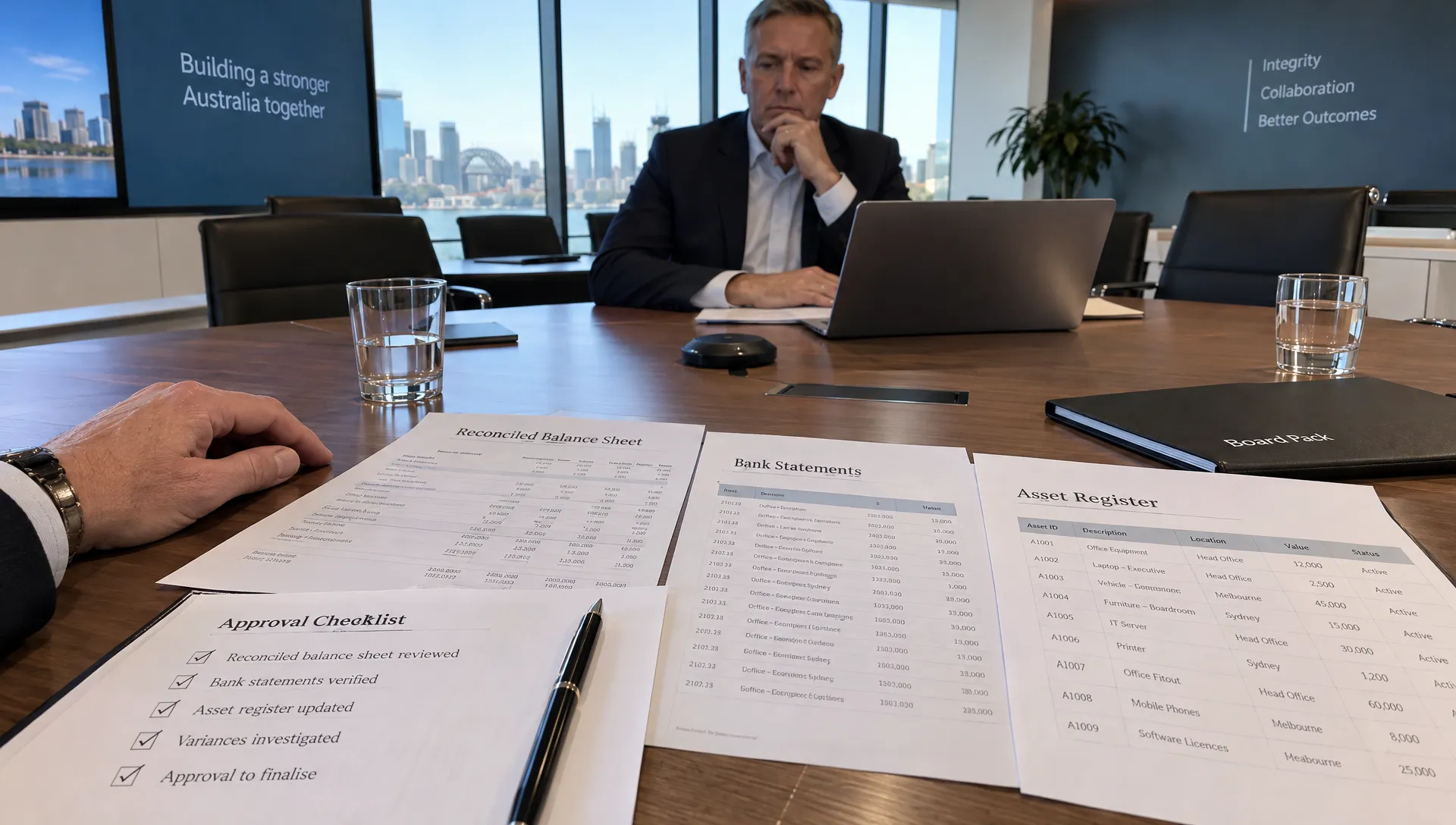
Before submission, we obtain approval from the person authorised to make the company’s declaration. Our review covers the return, material adjustments, relevant schedules and the estimated tax position. We address unresolved questions before seeking approval, not after lodgment.
We also distinguish annual income tax from BAS, PAYG instalments, FBT and superannuation obligations. These have separate reporting or payment requirements. PAYG instalments paid during the year are generally credited against the annual income tax liability; they do not replace the return.
For directors seeking tax help Australia-wide, we recommend confirming three dates in writing: when records are required, when approval is needed and when any tax payment falls due.
Use automation without weakening the audit trail
We use AI-driven automation to streamline financial workflows, reduce manual handling and improve the timeliness of information. The benefit extends beyond faster preparation: well-maintained digital records support greater accuracy and more current financial visibility throughout the year.
Automation still needs controls. We recommend checking bank-feed completeness, reviewing coding rules and retaining source documents against material transactions. A transaction posted automatically is not necessarily deductible, and an AI-generated classification does not establish its tax treatment.
We keep professional judgement central to issues such as private use, related-party arrangements, capital expenditure and loss eligibility. These depend on commercial context as well as accounting data.
Build capability alongside the technology
We also encourage finance teams to understand the systems they operate. Broader business and technology learning through Academia Europea UpSkilling can complement practical training in spreadsheets, data analysis and workflow management. We keep Australian tax interpretation separate from general digital-skills education.
Our approach to tax help Australia-wide combines automation with documented review. We retain reconciliations, adjustment workings, supporting evidence and approvals so that the return can be explained later.
For retention, we distinguish the ATO’s generally five-year tax-record requirements from the Corporations Act requirement to retain company financial records for seven years. Some asset and loss records need to be kept longer. We confirm the appropriate period rather than deleting documents when a software subscription ends.
Choose company tax support with the right scope
We recommend checking any proposed tax agent’s registration through the Tax Practitioners Board public register. Registration checks should sit alongside a clear understanding of who prepares, reviews and authorises the work.
We also recommend agreeing on scope before supplying records. A quote for return preparation may exclude bookkeeping repairs, historical amendments, Division 7A advice, international transactions or assistance with an ATO review. Identifying these matters early makes timing and fees easier to manage.
For corporate tax help Australia-wide, we distinguish general ATO guidance from advice that applies the law to a company’s specific circumstances. The ATO’s volunteer Tax Help program is intended for eligible individuals with straightforward affairs, not company tax return preparation.
At Perfect Accounting & Tax Services, we support clients across Australia through integrated services in Adelaide, Sydney and Melbourne. We connect accounting, tax and strategic advisory so that compliance findings can inform funding decisions, business performance and corporate growth.
Frequently asked questions
Can we lodge a company tax return without an accountant? We recognise that a company can prepare and lodge its own return using an accepted method. The company must still apply the relevant law, complete required disclosures and retain evidence. Professional review becomes particularly valuable where losses, related parties or overseas transactions are involved.
Do we need audited financial statements? We do not assume every company requires an audit. Audit and financial reporting obligations depend on matters such as company type, size, ownership and applicable exemptions. We assess these separately from the requirement to lodge an income tax return.
What if the company made a loss? We still check the lodgment obligation and calculate the tax loss correctly. An accounting loss does not necessarily equal a tax loss, and future use of carried-forward losses can depend on eligibility tests.
What if records are incomplete or returns are overdue? We first establish the missing periods, available evidence and ATO account position. We then prioritise reconstruction and lodgment. When arranging tax help Australia-wide, we recommend disclosing gaps immediately so that the engagement reflects the work actually required.
Next steps: prepare a lodgment-ready information pack
We recommend bringing the following to an initial review:
- The latest financial accounts, trial balance and prior company tax return.
- Bank, finance, payroll, BAS and superannuation records for the relevant year.
- Details of asset transactions, dividends, director loans and ownership changes.
- ATO correspondence, outstanding lodgments and known payment deadlines.
- A summary of unresolved transactions and significant commercial changes.
We can then identify reconciliation gaps, confirm the preparation scope and explain how automated workflows can improve the next reporting cycle.
Contact our team at Perfect Accounting & Tax Services for a consultation. We will help establish what your company needs to lodge accurately and how its financial records can support better strategic decisions.