
When clients approach us looking for a tax advice accountant, we start by separating legitimate employee expenses from private spending, employer reimbursements and costs that belong to a business. A receipt establishes a purchase, but it does not establish a deduction.
We assess employee deductions against the connection to current employment, the applicable tax rules and the available evidence. For professionals, executives and salaried company directors, that approach helps protect the return while identifying claims that are easily overlooked.
The three tests we apply before claiming an expense
We use the ATO’s work-related expense guidance as the starting point. Generally, an employee must satisfy three conditions:
- Personal expenditure: We confirm the employee incurred the expense and was not reimbursed.
- Income connection: We establish a direct relationship between the expense and earning employment income.
- Supporting evidence: We check that records support both the amount claimed and any work-use calculation.
We apportion expenses that serve both work and private purposes. Employer approval alone does not make an expense deductible, and receiving an allowance does not automatically justify an equivalent claim.
We also distinguish a deduction from a refund. A deductible $1,000 expense reduces tax by $300 if the applicable marginal income tax rate is 30%, before considering Medicare levy, offsets and other interactions. It does not generate a $1,000 refund.
How our tax advice accountant assesses common employee deductions
Working from home
We consider working-from-home expenses where employment duties are performed at home and additional running costs are incurred. The two main approaches are the ATO’s fixed-rate method and the actual-cost method.
Under the fixed-rate method, we apply the rate for the relevant income year to eligible hours worked at home. The rate covers specified expenses, including energy, internet, phone usage, stationery and computer consumables. We do not claim those costs again separately.
We require records of actual hours worked from home throughout the income year, together with evidence of the covered expenses incurred. A four-week estimate is not a substitute for full-year hours records under this method.
Under the actual-cost method, we calculate the additional deductible expenditure using appropriate records and work-use calculations. We compare methods rather than assuming the largest-looking calculation is defensible.
We may claim eligible depreciation of office equipment separately under either method. We generally exclude rent, mortgage interest and council rates for employees working from home. Occupancy expenses require separate consideration where a genuine place of business exists, including potential capital gains tax consequences.
Car, transport and overnight travel
We distinguish deductible work travel from ordinary commuting. Travel between home and a regular workplace is generally private, even where public transport is unavailable or the employee works unusual hours.
As your tax advice accountant, we examine the purpose and circumstances of each journey. Travel between workplaces, to client meetings or between work sites may qualify, but starting a trip at home does not automatically make it deductible.
For eligible cars owned or leased by an employee, we compare the cents-per-kilometre and logbook methods. The cents-per-kilometre method is limited to 5,000 work-related kilometres per car each income year and still requires a reasonable basis for the kilometres claimed.
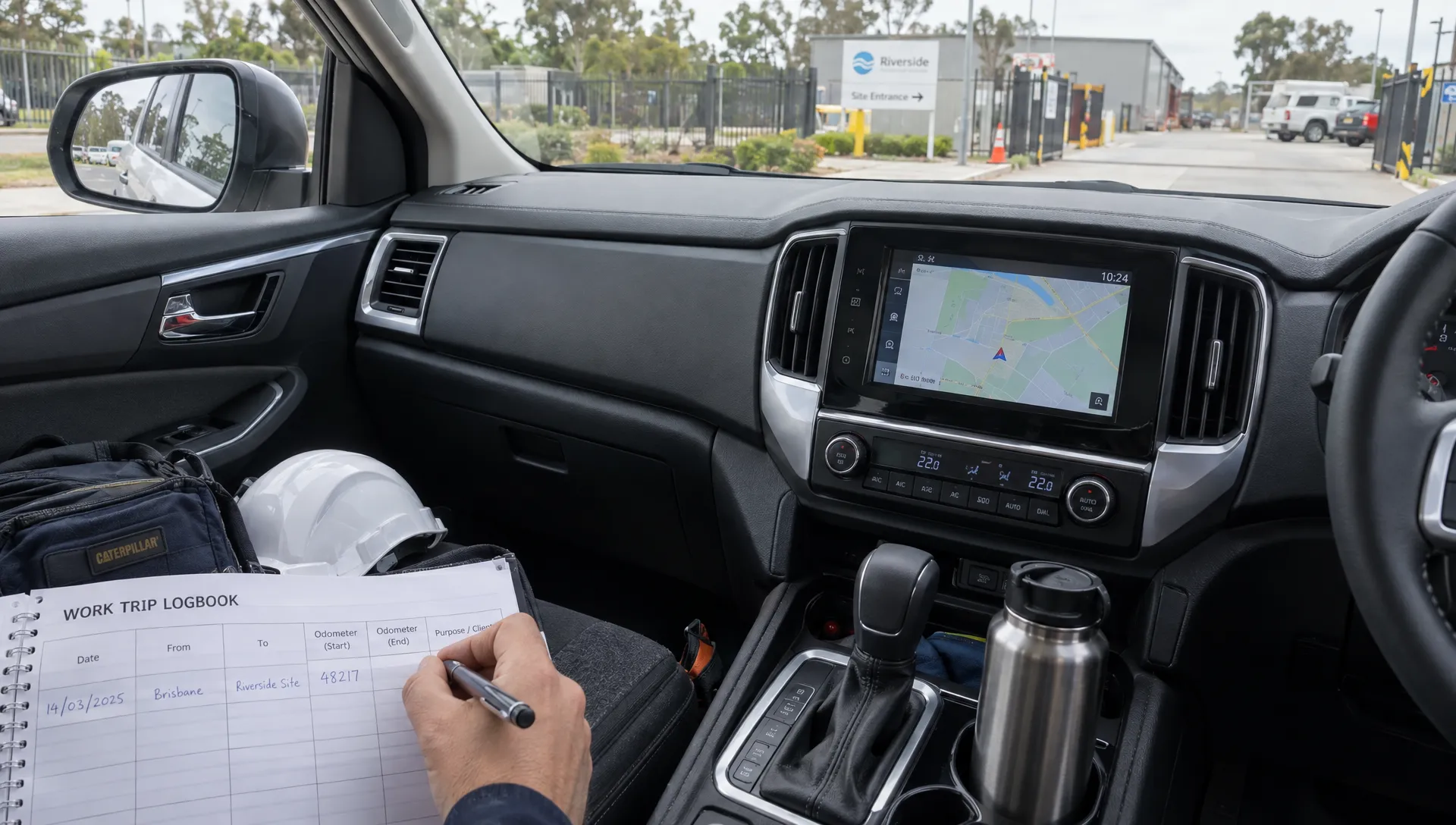
We generally use a representative 12-week logbook for the logbook method, supported by expense records and odometer readings. A logbook can generally remain valid for five years unless circumstances materially change.
We assess bulky-tool transport claims carefully. The tools must meet the relevant requirements, including being essential, sufficiently bulky to require vehicle transport and lacking secure storage at the workplace.
For overnight work travel, we review accommodation, meals and incidentals separately. We exclude private extensions and ordinary daily meals. An allowance does not remove the need to establish that deductible expenditure occurred.
Tools, laptops and other equipment
We assess employee-owned laptops, monitors, tools and other equipment according to their cost, useful life and work use.
An eligible depreciating asset costing $300 or less may qualify for an immediate deduction where the relevant conditions are met. We check whether it is part of a set costing more than $300 or one of several identical or substantially identical assets whose combined cost exceeds that threshold.
For higher-cost assets, we generally claim decline in value over time rather than deducting the full purchase price immediately. We apportion the deduction for private use.
We review substantial purchases with a tax advice accountant before assuming an immediate deduction is available. For example, a $2,000 laptop used 60% for work does not become a $300-or-less asset because only part of its use is employment-related.
We also distinguish personally purchased equipment from employer-provided or fully reimbursed items, which do not create the same employee deduction.
Uniforms, protective clothing and laundry
We consider protective clothing, occupation-specific clothing and qualifying uniforms. Examples may include protective footwear, an occupation-specific uniform or a compulsory uniform that distinctly identifies an employer.
We do not claim ordinary clothing simply because an employer requires it. A conventional business suit, black trousers or everyday shoes generally remain private expenses, even when worn only at work.
When acting as your tax advice accountant, we assess the garment’s characteristics rather than relying solely on a dress-code policy. Non-compulsory uniforms have additional requirements, including registration under the relevant scheme.
We claim laundry expenses only where the clothing itself qualifies and the calculation is supportable. We do not treat laundry concessions as an automatic entitlement to a standard deduction.
Self-education, professional development and subscriptions
We examine whether study maintains or improves skills used in current employment, or is likely to increase income from that existing employment.
Relevant professional development, technical subscriptions and some course costs may qualify. We exclude study undertaken to obtain initial employment or enter a new occupation, even where the new role would pay more.
For example, we would assess an employed engineer’s specialist engineering course differently from a course designed to establish an unrelated career.
Our tax advice accountant review connects course content to the employee’s actual duties. Employer encouragement is useful context, but it does not replace the legal test.
We also check professional association fees and union subscriptions. Mixed-purpose memberships require closer examination, particularly where substantial private benefits are included. We do not claim HELP repayments as self-education expenses.
Other deductions outside ordinary work expenses
We review several deductions that may sit outside the usual employee expense categories.
Tax return and advice fees: We assess eligible costs of managing tax affairs, including relevant registered tax agent fees. We generally claim these in the year incurred, which may differ from the year of the return being prepared.
Income protection: We consider premiums paid personally for insurance replacing assessable employment income. We separate these from life insurance, trauma cover and policies held through superannuation, which require different treatment.
Personal superannuation contributions: We check eligibility, contribution caps and the fund’s acknowledgement of a valid notice of intent before claiming a deduction. Timing matters, particularly before lodging a return, rolling over benefits or starting a pension.
Donations: We check whether a gift of $2 or more was made to an eligible deductible gift recipient and whether any material benefit was received. Raffle tickets and fundraising purchases are not equivalent to deductible gifts.
We include these items in a tax advice accountant consultation because they can materially affect the return without appearing in an employer’s income statement.
Expenses we normally exclude
We use the following distinctions to prevent private spending from entering an employee’s claim.
| Expense | Our usual treatment |
|---|---|
| Ordinary home-to-work travel | Private, unless a specific exception applies |
| Everyday lunches and coffees | Private, even during a busy working day |
| Conventional business clothing | Generally not deductible |
| Haircuts, cosmetics and ordinary grooming | Generally private |
| Fully reimbursed work purchases | No employee deduction |
| Personal gifts and engagement jewellery | Private spending |
We distinguish genuine donations from personal gifts. Buying an engagement ring from Nura Lab for a partner, for example, is a personal purchase rather than an employment deduction or charitable gift.
We also exclude childcare costs as an employee deduction, even where childcare enables attendance at work.

Additional checks for salaried directors and business owners
We separate a director’s employee expenses from company expenditure, shareholder transactions and business deductions. The entity that incurred an expense, the reimbursement arrangements and the purpose of the purchase all matter.
Where a company reimburses a director’s employment expense, we assess the company-side treatment and any FBT implications rather than also claiming it in the director’s personal return. We keep personal deductions separate from company GST credits and BAS reporting.
We take the same care where employment income sits alongside ABN income. Our explanation of what a sole trader can claim covers that separate framework, which should not be applied indiscriminately to employee expenses.
We use a tax advice accountant’s judgement to resolve these boundaries before lodgement. For owner-managed businesses, clean records then become a foundation for Strategic Advisory and Corporate Growth, supporting decisions about remuneration, cash flow and investment rather than merely completing compliance.
Records we need to support a defensible claim
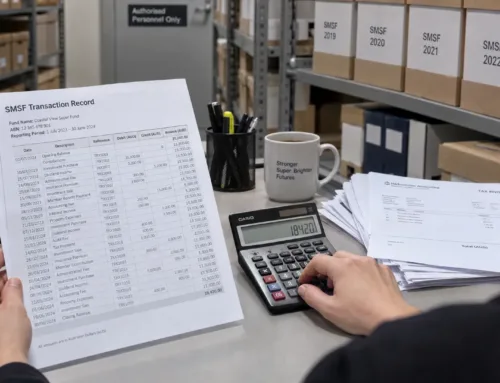
We generally retain receipts, invoices, work-use calculations and relevant diaries for five years after lodgement. Asset records and matters under review can require longer retention.
We recommend capturing the supplier, date, amount, description and employment purpose when an expense occurs. For shared-use assets, phone services and internet plans, we also document a reasonable apportionment method.
We do not treat a bank statement as a complete substitute for evidence. It may establish payment without identifying what was purchased or explaining its connection to employment.
Our AI-driven processes streamline financial workflows and improve processing speed, accuracy and visibility. We pair that automation with professional review because software cannot establish deductibility from a merchant name alone.
We combine a tax advice accountant’s judgement with digital records to identify duplicates, separate reimbursements and maintain consistent work-use calculations. For directors, integrating these records with company bookkeeping also improves the information available for strategic decisions.
Frequently asked questions
Can an employee claim $300 without receipts? We distinguish a substantiation exception from an automatic deduction. Where total eligible work-related expenses are $300 or less, written evidence may not be required for certain claims, but the expenditure must still have occurred and the calculation must be explainable. Separate rules apply to categories such as car expenses. Above the relevant threshold, written evidence is generally required for the whole applicable claim, not just the excess.
Can an expense be claimed if the employer pays an allowance? We check the allowance and expense separately. An allowance may be assessable, but the deduction depends on eligible expenditure actually incurred. We also check any specific record-keeping concessions rather than assuming the allowance amount is deductible.
When does a tax advice accountant add value? We recommend professional review where claims involve substantial travel, mixed private use, personal superannuation deductions, multiple income sources or director reimbursements. For a straightforward return, ATO guidance and myTax may be sufficient. We also recommend checking the practitioner’s Tax Practitioners Board registration and relevant accounting qualifications before engagement.
Can a missed deduction be added after lodgement? We can assess whether an amendment is available within the applicable time limit. We first verify entitlement and evidence rather than adding an estimated amount simply because the original return omitted it.
Next steps: arrange an employee deduction review
We recommend assembling the income statement, expense records, reimbursement details, work-from-home hours and any vehicle records before a consultation. We can then assess eligibility, compare available methods and explain the evidence needed for each claim.
Our team supports clients across Australia through integrated services in Adelaide, Sydney and Melbourne. We connect personal tax compliance with broader financial planning considerations and, where relevant, business advisory needs.
We invite you to contact Perfect Accounting & Tax Services for a consultation or to discuss how our automated accounting workflows can improve record accuracy and financial visibility.