

Complex tax matters rarely fail because a form was difficult to lodge. They fail because the underlying facts, evidence, timing, structure and commercial intent were not analysed properly before lodgement.
That is where expert tax accountants stand apart. In straightforward matters, software can guide a taxpayer through a return. In complex matters, the real value is judgement: knowing what the ATO is likely to question, how Australian tax law applies to a commercial arrangement, and how tax decisions affect cash flow, governance, funding, succession and growth.
For business owners, company directors and high-net-worth individuals, tax is not a once-a-year compliance event. It is a strategic discipline. We see the strongest outcomes when accounting, tax planning, documentation and automation work together throughout the year.
Complex matters need more than compliance processing
A simple tax return is largely historical. Income has been earned, deductions have been paid, and the task is to report them accurately.
Complex tax work is different. It often involves judgement before, during and after a transaction. The accountant must understand the client’s business model, ownership structure, related-party dealings, asset base, financing arrangements, risk profile and future plans.
Examples include:
| Complex matter | Why it requires specialist judgement | Strategic risk if handled poorly |
|---|---|---|
| Company and trust structures | Income distribution, Division 7A, asset protection and succession must align | Unexpected tax liabilities, unpaid present entitlement issues and poor governance |
| Property transactions | GST, CGT, main residence rules, margin scheme and development intent may overlap | Incorrect tax treatment, ATO review and reduced after-tax return |
| ATO reviews or audits | Evidence, timelines, legal basis and communication strategy matter | Penalties, interest, amended assessments and reputational damage |
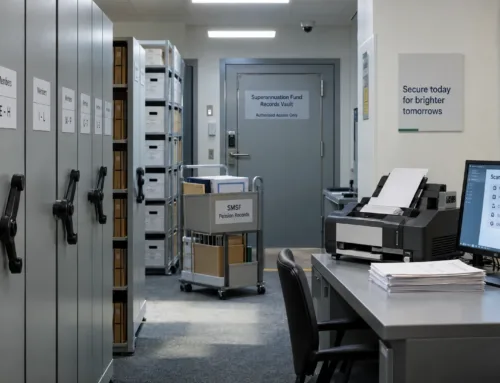
| SMSF compliance | Contribution caps, pension rules, related-party transactions and investment strategy must be monitored | Fund compliance breaches and trustee exposure |
| Cross-border income | Residency, foreign tax credits, withholding tax and transfer pricing may apply | Double taxation, missed reporting and audit risk |
| Employee share schemes | Taxing points, discounts, CGT interactions and employer reporting can be complex | Cash-flow stress for employees and reporting errors for employers |
The difference is not simply technical knowledge. It is the ability to turn technical knowledge into clear decisions.
What sets expert tax accountants apart?
1. They diagnose before they advise
A skilled adviser does not begin with the tax return. We begin with the commercial facts.
For a company director, that may mean reviewing loan accounts, director remuneration, retained earnings, payroll obligations, BAS history and related-party transactions before recommending a tax strategy. For a property investor, it may mean examining acquisition documents, financing, ownership percentages, rental history, improvement costs and future disposal plans.
This diagnostic approach prevents the common mistake of treating symptoms rather than causes. A late BAS, for example, may not be the real problem. It may indicate weak bookkeeping workflows, poor cash-flow forecasting, GST coding errors or inadequate finance governance.
When the diagnosis is right, compliance becomes the foundation for strategic advisory and corporate growth.
2. They understand the difference between tax minimisation and tax risk
Every business wants to manage tax efficiently. The issue is whether the strategy is commercially sound, properly documented and defensible under Australian tax law.
Expert tax accountants understand that an aggressive deduction or artificial arrangement can create far more cost than it saves. The ATO has strong data-matching capability across banks, employers, property records, superannuation funds, Single Touch Payroll, merchant facilities and other sources. In 2026, the risk is not only whether an error exists, but how quickly it can be detected.
Sound tax planning considers:
- Whether the arrangement has genuine commercial substance.
- Whether the timing of income and deductions is supportable.
- Whether related-party transactions are properly documented.
- Whether GST, PAYG withholding, Superannuation Guarantee and FBT have been considered together.
- Whether the client’s records meet ATO expectations.
The objective is not to be overly conservative. It is to be strategic, accurate and prepared.
3. They connect tax, cash flow and business strategy
Tax decisions can affect working capital, finance approvals, investor confidence and the value of a business.
For example, delaying bookkeeping until year-end may seem cost-effective, but it often creates poor visibility. Directors may not know their true profitability, GST position, payroll exposure or tax reserve requirements until too late. That weakens decision-making.
By contrast, monthly reconciliations, automated data capture and rolling forecasts allow business owners to act before problems become expensive. We use AI-driven accounting workflows to improve speed, reduce manual errors and surface exceptions earlier. The technology is not a replacement for professional judgement. It is an accelerator that gives our team cleaner data and gives clients clearer visibility.
For growing companies, this matters. A business preparing for expansion, acquisition, funding, restructuring or exit needs more than a compliant tax return. It needs financial information that can withstand due diligence.
4. They know when a matter crosses into governance risk
Complex tax matters often involve more than tax. They touch governance, director duties, employment law, trust law, superannuation rules and commercial contracts.
A payroll issue, for example, can involve PAYG withholding, Superannuation Guarantee, award interpretation, payroll tax, workers compensation and Single Touch Payroll reporting. A trust distribution issue can affect beneficiaries, unpaid present entitlements, Division 7A, asset protection and estate planning.
Expert tax accountants recognise these intersections early. We also know when to work alongside lawyers, financial advisers, finance brokers, valuers and other specialists. Strong advice is not isolated. It is coordinated.
5. They build evidence before the ATO asks for it
In complex matters, the answer is only as strong as the evidence supporting it.
The ATO generally expects business records to be kept for five years, and the records must explain transactions and support tax positions. The ATO’s record-keeping guidance for business is clear that good records are central to accurate reporting.
We treat documentation as a risk management asset. That includes board minutes, loan agreements, trust resolutions, invoices, contracts, valuation reports, logbooks, apportionment calculations, payroll reports and correspondence.
A well-documented position can materially change the tone of an ATO review. It shows that the taxpayer had a considered basis for the treatment adopted.
Where expert advice changes the outcome
ATO reviews, audits and voluntary disclosures
When the ATO raises questions, speed and accuracy matter. The first response often frames the rest of the engagement.
An expert accountant will review the ATO’s request, identify the relevant tax issues, test the client’s evidence, quantify exposure and prepare a structured response. If an error exists, a voluntary disclosure strategy may reduce penalties. If the client’s position is sound, the response should explain the facts and law clearly.
This is not a time for guesswork. It is a time for disciplined analysis.
Division 7A and shareholder loan issues
Division 7A remains one of the most common risk areas for private companies. Problems often arise when shareholders or associates use company funds without appropriate loan agreements, minimum yearly repayments or proper accounting treatment.
A general bookkeeper may record the transaction. An expert tax accountant asks what the transaction means. Is it a loan, dividend, reimbursement, wage, trust entitlement or error? Has it been documented? Can it be corrected? What are the consequences for the company and shareholder?
For directors, this can be the difference between a manageable adjustment and a deemed unfranked dividend.
Trusts, family groups and intergenerational wealth
Trusts can be powerful, but they demand precision. Distribution resolutions must be prepared on time and align with the trust deed. Beneficiary entitlements must be recorded correctly. Tax planning must consider minors, corporate beneficiaries, unpaid entitlements, capital gains, streaming and family trust elections where relevant.
For high-net-worth families, the issue is rarely one year of tax. It is the long-term structure of wealth, control, succession and asset protection.
Property development, investment and GST
Property transactions often create tax complexity because intention matters. A property acquired as a long-term investment may be treated differently from a property acquired for development and resale. Renovation, subdivision, short-term letting and commercial leasing can all change the analysis.
GST can be particularly sensitive. Residential premises, commercial property, new residential premises, the margin scheme and going concern concessions each require careful review.
A wrong assumption at contract stage can reduce profit after settlement. We prefer to be involved before documents are signed, not after the transaction is locked in.
Fast-growing service businesses and mixed revenue models
Modern businesses rarely fit into one neat category. A professional services firm may sell subscriptions. A clinic may sell products, services, gift cards and memberships. An e-commerce business may combine domestic sales, international suppliers, platform fees, merchant fees and inventory.
The principle is universal: even a customer-facing wellness model such as a skin care and facial treatment clinic can have layered revenue streams that need clear accounting treatment. For Australian businesses, that translates into practical questions around GST coding, stock control, payroll, contractor classification, merchant reconciliations and management reporting.
Complexity is not always caused by size. It is often caused by transaction variety.
The role of AI-driven accounting in complex tax matters
Technology has changed the standard of professional accounting. Clients should not have to wait until the end of the financial year to understand their position.
Our AI-driven processes help streamline data capture, transaction coding, anomaly detection and workflow management. This gives our advisers more time to focus on interpretation, planning and governance.
In practice, automation supports complex tax work by improving:
- Accuracy, because recurring transactions can be coded consistently and unusual items can be flagged for review.
- Speed, because bank feeds, invoices, payroll data and BAS information can be processed more efficiently.
- Visibility, because directors can review financial performance and tax obligations earlier.
- Audit readiness, because digital records and reconciliations are easier to retrieve and verify.
- Advisory value, because clean data supports forecasting, scenario modelling and better commercial decisions.
This is the strategic pivot many businesses need. Bookkeeping is not merely administration. When properly automated and reviewed, it becomes the data layer for tax planning, cash-flow control and corporate growth.
How to identify an expert tax accountant
Registration is the baseline. In Australia, taxpayers can check whether a practitioner is registered through the Tax Practitioners Board public register. However, registration alone does not tell you whether an adviser is suited to complex matters.
When selecting an accountant for higher-risk work, directors and investors should look for broader capability.
Technical depth
The adviser should be comfortable with Australian tax law across income tax, GST, CGT, FBT, PAYG withholding, Superannuation Guarantee and entity structuring. They should also know where the boundaries are and when specialist legal input is required.
Commercial understanding
Tax advice should make sense in the context of the business. A technically correct option may still be poor advice if it harms cash flow, complicates finance arrangements or undermines an exit strategy.
Proactive communication
Complex matters require clear timelines, assumptions and responsibilities. Clients should know what information is required, what risks exist and what decisions must be made before key dates.
Digital capability
A modern tax adviser should not rely on manual spreadsheets and year-end clean-up alone. Automated workflows, cloud accounting, digital document management and real-time reporting are now central to strong financial control.
National capability
Many businesses operate across state borders. Payroll tax, workers compensation, property interests, employees, contractors and operations may span multiple jurisdictions. Our integrated service capability across Adelaide, Sydney and Melbourne allows us to support clients nationally while maintaining practical local understanding.
Warning signs your tax matter may be more complex than it appears
A matter that looks simple on the surface may need expert review if any of the following apply:
- You operate through multiple entities, including companies, trusts or partnerships.
- You have shareholder loans, unpaid trust entitlements or related-party transactions.
- You are buying, selling, subdividing or developing property.
- You have foreign income, overseas assets or changing tax residency circumstances.
- You have received an ATO letter, review notice or audit request.
- Your business has rapid growth, declining margins or irregular cash flow.
- You employ staff, pay contractors or operate across multiple states.
- You have an SMSF, employee share scheme interests or significant investment assets.
- Your bookkeeping is behind, inconsistent or heavily manual.
The earlier these issues are reviewed, the more options are usually available.
The cost of getting complex tax wrong
Poor tax advice can create visible and hidden costs.
The visible costs include amended assessments, penalties, interest, professional fees and delayed lodgements. The hidden costs can be more damaging: lost management time, poor cash-flow decisions, financing delays, director stress, family disputes and reduced business value.
In our experience, the most expensive tax problems are often preventable. They arise because advice was sought after a transaction, after an ATO notice, or after records had already deteriorated.
The best time to involve expert tax accountants is before major decisions are made.
For directors planning ahead, our article on company taxes in Australia outlines practical planning areas to review before year-end. For individuals deciding whether their affairs are still suitable for self-lodgement, our guide to myTax in Australia explains when professional support becomes important.
Frequently Asked Questions
When should a business engage expert tax accountants? A business should seek expert advice before major transactions, restructures, ATO reviews, rapid growth, property dealings, trust distributions, shareholder loans or cross-border arrangements. Early advice usually creates more options and reduces the risk of corrective action later.
Are expert tax accountants only needed for large companies? No. Complexity is not determined only by size. A sole trader with Personal Services Income issues, a property investor with GST exposure, a family trust with distribution problems or an SMSF trustee with related-party transactions may all need specialist advice.
How does automation improve tax outcomes? Automation improves the quality and timeliness of financial data. It helps identify anomalies, supports accurate BAS and payroll reporting, strengthens record keeping and allows advisers to focus on higher-value analysis, forecasting and tax planning.
Can an accountant help if the ATO has already contacted us? Yes. The response should be carefully managed. We review the ATO request, assess the facts, test the evidence, quantify potential exposure and prepare a structured response. If an error exists, we can consider whether voluntary disclosure is appropriate.
What should directors prepare before a complex tax consultation? Directors should gather current financial statements, tax returns, BAS records, payroll reports, loan account details, trust deeds or company documents, major contracts, finance documents and any ATO correspondence. Clean records allow for faster and more accurate advice.
Next steps: how we can help
At Perfect Accounting & Tax Services, we support business owners, company directors and high-net-worth individuals with complex Australian tax matters, strategic advisory and digitally enabled accounting workflows.
Our team brings 25 years of professional experience across corporate and SME accounting, BAS, payroll, advanced tax planning, SMSF compliance, audit support, virtual CFO services and AI-driven financial automation. We work with clients across Australia, with integrated support in Adelaide, Sydney and Melbourne.
If your tax position involves complexity, uncertainty or growth, we recommend taking three practical steps.
- Review your current structure and records: Identify gaps in bookkeeping, BAS, payroll, trust documentation, director loan accounts and tax governance.
- Assess your forward risk: Consider upcoming transactions, ATO exposure, cash-flow pressure, funding plans, property matters and succession objectives.
- Move from annual compliance to real-time visibility: Use automated accounting workflows to improve accuracy, speed and management insight throughout the year.
Complex tax matters deserve more than reactive lodgement. They require strategic thinking, reliable data and advisers who understand both the legislation and the commercial outcome.
Contact our team to book a consultation and learn how our automated accounting workflows can strengthen compliance, improve financial visibility and support your next stage of growth.