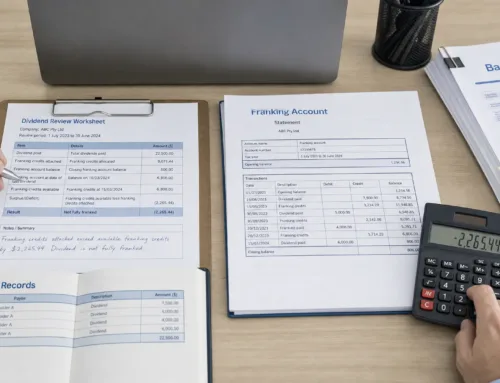


For a high-growth Australian business, accounting and tax preparation is no longer a year-end exercise. It is the control system that keeps BAS, GST, PAYG withholding, superannuation, cash flow and board reporting aligned while revenue, headcount and complexity rise.
We work with directors, founders and high-net-worth business owners who need more than compliant lodgements. They need financial data that supports pricing, hiring, funding, expansion, acquisitions and risk management across Australia. When operations stretch from Adelaide to Sydney and Melbourne, inconsistent finance processes can quickly become a drag on corporate growth.
The strategic question is simple: can your finance function scale at the same pace as your business model? If the answer is uncertain, growth may be amplifying hidden risks rather than strengthening enterprise value.
Why accounting and tax preparation changes when growth accelerates
Early-stage finance systems are often built for survival. A founder chooses accounting software, connects a bank feed, lodges BAS and keeps moving. That may be enough when transaction volumes are modest. It is rarely enough once the business adds staff, locations, investors, inventory, property assets or cross-border suppliers.
Growth exposes weak finance architecture. Chart of accounts settings become too broad, project profitability is unclear, GST coding errors multiply and payroll obligations become harder to monitor. Directors may still receive reports, but those reports often arrive too late to support commercial decisions.
High-growth businesses need a finance function that combines compliance discipline with forward-looking advisory. That means accurate reconciliations, timely lodgements and clear reporting, but it also means tax planning, scenario modelling, working capital visibility and governance fit for directors.
The finance architecture high-growth businesses need
At this stage, accounting and tax preparation should produce decision-grade data, not simply reconciled bank accounts. We look first at whether the finance structure can explain margins, cash movements, tax liabilities and operational performance without a last-minute scramble.
The right architecture depends on the business, but the core components are consistent.
| Finance area | What needs to scale | Strategic value |
|---|---|---|
| Chart of accounts | Clean coding by division, project, location or entity | Clearer profitability and board reporting |
| BAS and GST processes | Consistent tax coding, review checks and lodgement calendars | Lower ATO risk and better cash planning |
| Payroll and superannuation | Accurate PAYG withholding, awards, super and leave treatment | Reduced compliance exposure as headcount grows |
| Month-end close | Defined deadlines, reconciliations and review workflows | Faster decisions based on reliable numbers |
| Management reporting | Dashboards, variance analysis and forecast updates | Stronger pricing, hiring and funding decisions |
| Automation | Bank rules, document capture and workflow alerts | Less manual handling and earlier error detection |
A business cannot manage what it cannot see. This is why we treat bookkeeping as the foundation for strategic advisory, not as a back-office task. Our view aligns closely with the principles behind modern accounting services that enhance financial visibility, particularly for owners who need timely information rather than historical summaries.
Compliance risk compounds faster than revenue
In our view, accounting and tax preparation for a scaling company must treat compliance as a live risk register, not an annual clean-up. The larger the business becomes, the more expensive it is to correct misclassified transactions, late superannuation payments or undocumented director transactions.
The ATO expects Australian businesses to maintain records that substantiate their tax positions. For GST-registered businesses, BAS accuracy depends on correct treatment of taxable sales, GST-free supplies, input tax credits and adjustment events. The ATO’s GST guidance remains a useful reference point, but execution depends on how well your internal systems capture transactions.
Payroll is another pressure point. Since 1 July 2025, the superannuation guarantee rate is 12 percent, and employers must also manage PAYG withholding, Single Touch Payroll reporting and contractor classification risk. As teams grow, errors that once looked immaterial can become significant.
| Growth trigger | Common risk | Practical response |
|---|---|---|
| Hiring staff quickly | Incorrect PAYG, super or leave treatment | Payroll review and automated compliance checks |
| Adding directors or shareholders | Poorly documented loans or drawings | Governance review and tax advice before funds move |
| Expanding interstate | Inconsistent procedures across teams | Unified accounting workflow and reporting standards |
| Increasing vehicle use or benefits | FBT exposure | Benefit tracking and early FBT assessment |
| Larger inventory or stock movements | GST and margin reporting errors | Stronger stock, supplier and cost-of-sales controls |

Tax planning must be connected to cash flow
For high-growth businesses, accounting and tax preparation works best when tax planning and cash-flow forecasting are built from the same source data. Tax should not be calculated after commercial decisions have already been locked in.
We review the timing of GST, PAYG instalments, company tax, director remuneration, dividends, capital purchases, asset financing, inventory build-up and debt repayments together. This integrated approach helps directors understand when profit converts into cash and when tax obligations may tighten working capital.
Tax planning also influences strategic choices. A company considering a new warehouse, a national sales team, an acquisition or a major technology investment should understand the tax and cash-flow implications before committing. The objective is not aggressive tax minimisation. It is disciplined planning that protects liquidity and supports sustainable growth.
This is the same commercial logic we apply when advising on tax-efficient accounting that improves cash flow. The best tax advice is rarely isolated from funding, operations and profitability.
Automation, AI and real-time visibility
Automation changes accounting and tax preparation by reducing manual handling and creating earlier warnings when data looks incomplete, inconsistent or commercially unusual. For high-growth businesses, speed matters because decisions are often made before month-end accounts are finalised.
Our team uses AI-driven processes and digital workflows to streamline document capture, transaction classification, reconciliations and review points. Automation is most valuable when it improves the quality of information available to directors, not when it simply accelerates flawed processes.
Practical automation may include bank feeds, supplier bill capture, recurring journals, approval workflows, payroll checks, GST coding rules and anomaly review. These tools help finance teams identify exceptions faster. They also free senior advisers to focus on structure, risk, margins, funding and growth strategy.
What automation should never replace
Technology improves efficiency, but judgement remains essential. Software cannot fully interpret a shareholder agreement, assess the commercial purpose of a restructure, understand family group dynamics or determine whether a transaction creates FBT, Division 7A or capital gains tax implications.
We see the best results when automation handles the repetitive work and experienced advisers interpret the consequences. This combination gives directors real-time financial visibility without sacrificing professional judgement.
Structuring for investors, acquisitions and multi-city growth
When capital raising or acquisition activity begins, accounting and tax preparation needs to support due diligence as well as statutory compliance. Investors, lenders and acquirers want confidence that revenue, margins, tax liabilities, payroll obligations and related-party dealings are reliable.
That requires clean reporting across entities, well-documented intercompany transactions, consistent accounting policies and a clear tax history. If a business has trusts, companies, SMSFs, property assets, intellectual property or family group structures, the finance function must show how each part connects.
Multi-city operations add another layer. A business with staff, suppliers and customers across Adelaide, Sydney and Melbourne may need standardised approvals, centralised reporting and local awareness of commercial realities. We support clients nationally while maintaining practical service capability in each of these major markets.
A tax adviser becomes valuable when they help directors make better structural decisions before complexity hardens. We explore that strategic role further in our article on when a tax professional becomes a strategic advantage.
A practical quarterly framework for directors
We recommend reviewing accounting and tax preparation across four board-level questions each quarter. This cadence keeps the finance function aligned with the speed of the business.
| Quarterly question | What directors should expect to see |
|---|---|
| Are our numbers reliable? | Completed reconciliations, reviewed BAS positions and clear management reports |
| Are tax obligations funded? | Forecasts for GST, PAYG, superannuation, FBT and income tax |
| Are margins improving or deteriorating? | Gross margin, labour cost, overhead and project profitability analysis |
| Are we ready for growth events? | Clean records for funding, acquisitions, restructuring or expansion |
If the finance team cannot answer these questions quickly, the issue is usually not effort. It is system design. High-growth businesses need process discipline, clear ownership and advisory oversight before scale turns small gaps into material risk.
Frequently Asked Questions
How often should a high-growth business review accounting and tax preparation? We recommend a quarterly strategic review, supported by monthly management reporting. BAS cycles, payroll obligations and cash-flow forecasts should be monitored more frequently where revenue, staffing or inventory levels are changing quickly.
What tax risks do scaling Australian businesses often underestimate? Common risks include GST coding errors, late superannuation, contractor misclassification, FBT exposure, undocumented director drawings, Division 7A issues and poor records for asset purchases or related-party transactions.
Can automation replace an accountant for a growing business? No. Automation improves speed, consistency and visibility, but complex tax positions require professional judgement. The strongest model combines AI-driven workflows with experienced Australian tax and accounting advice.
When should directors consider virtual CFO support? Directors should consider virtual CFO support when they need forecasting, board reporting, funding preparation, margin analysis, restructuring advice or stronger governance, but do not require a full-time CFO.
Next steps for stronger financial control
High-growth businesses need accounting and tax preparation that supports commercial decisions, not just statutory deadlines. The right system gives directors confidence in compliance, cash flow, margins, tax planning and growth strategy.
Our team at Perfect Accounting and Tax Services brings 25 years of professional experience across accounting, tax and strategic advisory. We combine Australian tax expertise with AI-driven automation to help businesses improve accuracy, shorten workflows and gain clearer financial visibility across Adelaide, Sydney, Melbourne and beyond.
If your business is scaling, preparing for investment or struggling to keep finance processes aligned with growth, we can help you assess the gaps and design a more strategic accounting workflow. Contact Perfect Accounting and Tax Services to arrange a consultation and learn how our automated accounting processes can support your next stage of corporate growth.